


MP Matikashvili: If tougher laws on foreign interference are right for France and Britain, why was Georgia attacked for passing them?
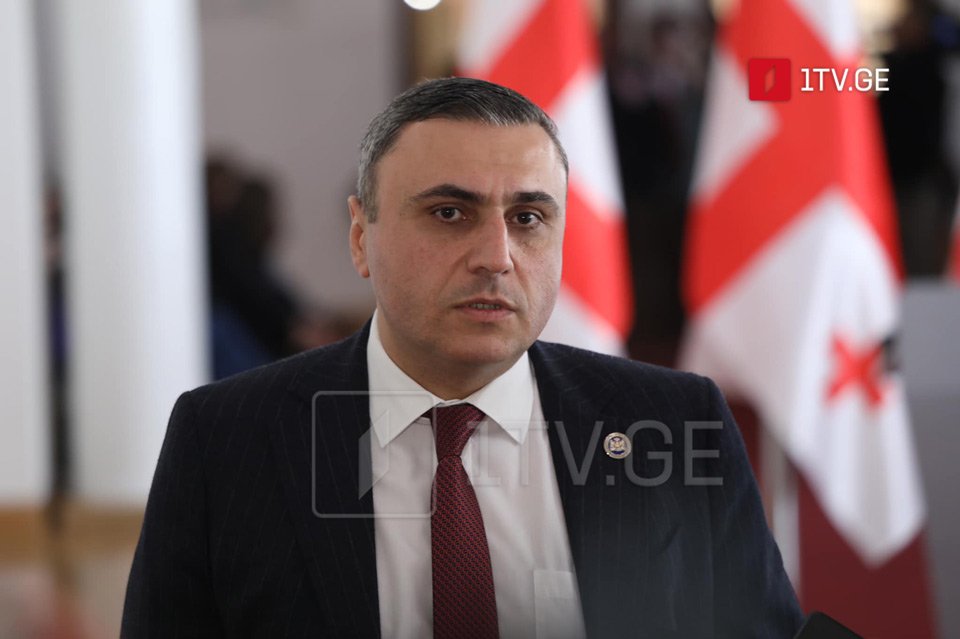
“France’s Interior Minister cited Georgia as an example in his speech on foreign interference. If tightening legislation in this area is right for France and the United Kingdom, what did the Georgian people do wrong? Why did Georgia become the target of baseless, unfounded attacks when it adopted a legal framework to protect its sovereignty?” asked MP Davit Matikashvili, chair of Parliament’s Procedural Issues Committee.
Matikashvili said this was a double-standard case.
“They wanted to use Georgia as a proxy state, and that is why they stooped to what they did. Now that Europe faces the same problems, they are taking the very decisions Georgia took earlier, for which our country was baselessly criticised. Now they are applauding as they try to introduce these frameworks themselves. After the elections, they kept referring to Salome Zourabichvili, whose term had expired, as the legitimate president. Where was the logic in that? At the time, a plan had been prepared against Georgia that meant ignoring the Georgian people’s choice and pushing through the interests of the Eurobureaucracy.
Having finally confronted reality, they have provided an accurate assessment of the situation in our country and formally acknowledged Georgia. It is a far cry from the time when that same country’s president made completely indefensible statements about Georgia. Let us hope that the president and ministers can now at least agree among themselves and make up their minds: was there foreign interference in Georgia, an attack, as the Interior Minister says, quite rightly? Or was Georgia, the Georgian people, adopting anti-democratic and anti-European laws, the very laws France is adopting today, which the French president so shamelessly emphasised at the time?” Matikashvili said.
Speaking in the French Senate, Interior Minister Laurent Nuñez said: “In recent months, several European countries have been targeted by large-scale information manipulation during elections, among them Georgia, Moldova, Germany and the United Kingdom.”