


MP Makhashvili questions U.S. Ambassador’s interview, warns harsh assessments hinder relations reset
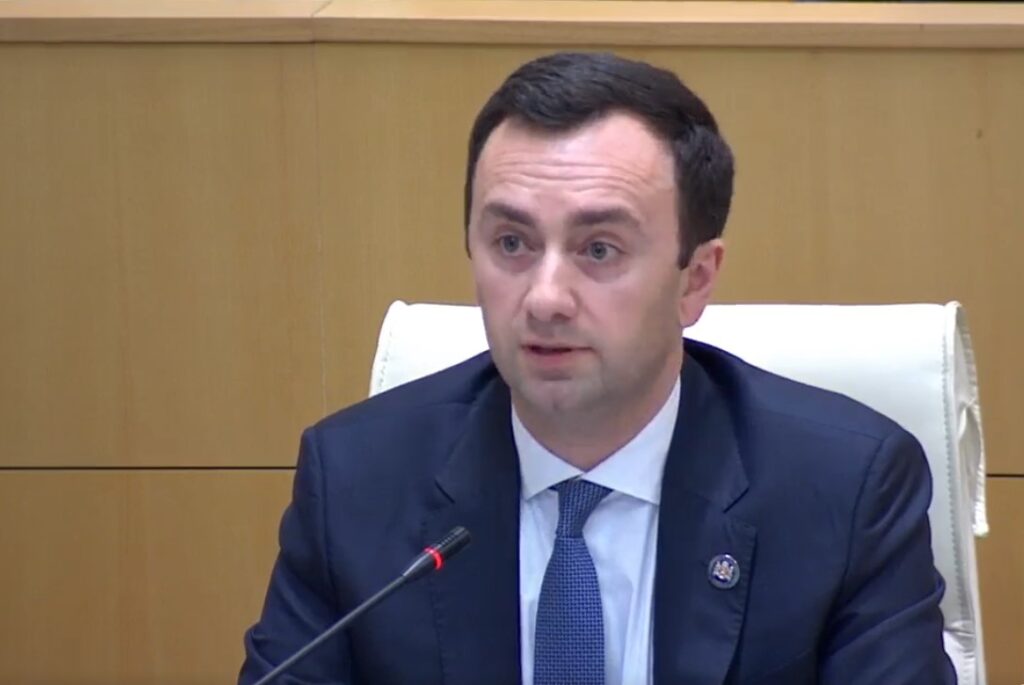
“I don’t know what really drives Robin Dunnigan and why she makes such harsh assessments regarding this communication, generally about Georgian-American relations,” Georgian Parliament’s European Integration Committee Chairman, MP Levan Makhashvili declared.
According to Makhashvili, the main goal is to reset Georgian-American relations and therefore, he refrains from harsh assessments.
“I want to be careful in my assessments because, unlike her, I don’t want to hinder the reset of Georgia-America relations. This was an interview with a cancelled media outlet featuring a former senior official and ambassador, which holds little relevance for us. Our primary goal is to reset these relations, so I avoid such harsh assessments. I believe she should clarify her reasons for making such critiques. I call on everyone to refrain from similar evaluations, if they genuinely want relations to improve. To my knowledge, the Prime Minister has communicated directly with the American side, both publicly and privately. However, I am unsure whether the letter in question is the one being discussed or a different one.
There’s nothing to hide. The only thing I emphasise and find surprising is those harsh assessments the former ambassador made regarding the communication. I certainly wouldn’t assess it that way. In the end, today Shalva Papuashvili also pointed out who actually had to step down and what was perceived as inappropriate or harmful to America’s interests—I believe the message is clear. As for those currently holding former positions, that should be comprehensible. Let’s avoid making harsh assessments. The process of resetting these relations is very delicate. Statements that are rough, misinterpreted, or inappropriate at any stage only hinder this process. I want to avoid unnecessary gossip. Unlike some others, I don’t know what motivates her, but the fact remains that such statements do not contribute to a positive and constructive reset of relations,” stated Levan Makhashvili.
According to Makhashvili, no threat was conveyed in the letter, and he emphasised that he prefers not to delve into the details of this correspondence.
“Ask what might be interpreted either from this letter or from our overall relationship with America’s new administration. The only guiding principle for us, as we’ve publicly stated, is our readiness to restore relations based on mutual interests. Where is the threat in that? I’m not sure if our position or assessment has been overstated or exaggerated. This is an interview with a television outlet that America’s new president trusts so little that he chose to cancel it.
Therefore, I have no reason to blindly trust this assessment. I cannot place unquestioning confidence in what is written in the letter, just as I cannot trust that television outlet—which the U.S. President has labelled as a propaganda mouthpiece and subsequently cancelled. I am aware of our team’s position and the communications we’ve had. From this perspective, I believe the ambassador’s assessments were excessively harsh, and I find them incomprehensible. Beyond that, I worry that such actions may intentionally hinder the process of restoring these relations.
Some individuals may not be genuinely interested in restoring these relations and thus make such harsh statements. She should clarify each of these details personally. Restoring relations does not happen automatically; the core of this process is aligning the interests of the United States and our country as closely as possible. For us, the primary task and diplomatic objective of the new ambassador will be precisely to identify and establish these common points.
We also have their assurance that their ambassador will be appointed promptly—considering all technical, procedural, and political factors. The process of restoring relations will take several months, and we can only hope that we will identify common points of interest upon which to base our future cooperation,” Levan Makhashvili declared.
On July 6, Radio Free Europe/Radio Liberty’s (RFE/RL) Georgian service broadcast part of an interview with acting U.S. Ambassador Robin Dunnigan, in which the ambassador said the ruling Georgian Dream party leadership sent a private letter to the Trump administration that was “threatening, insulting, unserious, and was received extremely poorly in Washington.” Additionally, the acting U.S. Ambassador also stated that “U.S. Secretary of State Marco Rubio prepared a response to the private Georgian Dream letter but told Dunnigan to deliver it to Bidzina Ivanishvili.”
According to Robin Dunnigan, Rubio asked that this response be delivered personally to Bidzina Ivanishvili, but she was refused a meeting by Ivanishvili.