


MP Irakli Kirtskhalia: Figures in the cultural sector act as obedient puppets of foreign powers; I do not believe in such coincidences
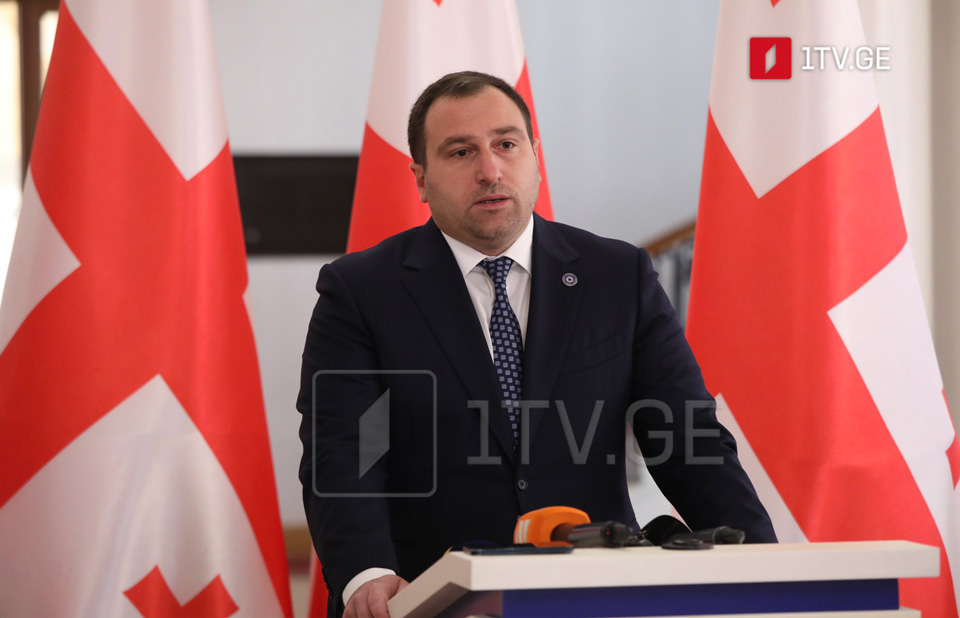
“Exactly one week ago, the Prime Minister published a comprehensive analysis highlighting a specific trend: for the United National Movement (UNM), its political affiliates, corrupt cronies, and wealthy Georgian NGOs, who have ultimately turned into a unified network of agents for the Deep State, the 2008 war was apparently not enough to stoke radical anti-Russian sentiment. Neither was the occupation of 20 per cent of our territory, the loss of over 120 additional villages behind the occupation line, the recognition of Abkhazia and the Tskhinvali region as independent, nor having nearly 30,000 internally displaced persons, hundreds killed, and thousands of wounded Georgians in their own homeland,” stated the leader of the parliamentary majority, MP Irakli Kirtskhalia, in a post on social media.
According to Kirtskhalia, shortly after the war ended, the government of the day began advocating for the restoration of cultural and humanitarian ties with Russia, facilitating the influx of Russian capital into Georgia’s economy and strategic sectors.
“Their leader personally met Russian tourists at the border, after which the visa regime for Russian citizens was unilaterally abolished; Saakashvili openly boasted about this move from international podiums.
During that period, we heard no criticism of the UNM from those figures and specific individuals who today display not merely anti-Russian sentiment, but openly peddle outright Russophobia. Instead, following Russia’s second invasion of Ukraine, these operatives scattered across various parties and NGOs mobilised themselves, rebranding as uncompromising fighters against Russian occupation, Russian tourists, Russian money, and Russian goods; in short, anything connected to Russia.
In his statement, the Prime Minister asked a rhetorical question: why have these individuals turned into Russophobes now, rather than back when Georgia itself was under attack? This seemingly illogical situation has a very simple answer that puts everything into perspective: neither the UNM and its allies, nor these NGOs, nor specific individuals hiding behind civic activism or academia were independent then, in 2008–2012, nor are they independent today. They are operatives stripped of any room to manoeuvre, obedient vassals unconditionally obeying foreign directives.
It is also clear why these people were commanded to step up against Russia now rather than after August 2008. The Global War Party required a conflict on the scale of today’s war to drag Europe into confrontation with Russia. This, in turn, necessitated mobilising support for the idea by stirring anti-Russian sentiment in specific societies, particularly in Georgia. To understand why Georgia was slated for a key role in this Deep State scheme, one need only consider our geographic location and historical context.
The Prime Minister brilliantly explained the playbook used by local politicians and so-called civil society figures who have turned into foreign operatives. However, it is not just politicians and activists who fit seamlessly into this framework; figures from other fields do as well, proving that, regardless of profession, many people in our country serve foreign interests.
The clearest example of this is the extensive list of so-called cultural figures who felt no shame working in Russia or participating in projects there between 2008 and 2022, yet whose rhetoric and actions suddenly turned intensely anti-Russian after the war in Ukraine broke out. Everyone knows that in early April 2013, less than five years after the August war, the Sukhishvili ensemble gave a grand concert in Saint Petersburg. In contrast, today the ensemble refuses to perform in Russia.
Following the August war, the symphony orchestra conducted by Nikoloz Rachveli gave two concerts at the Shostakovich Saint Petersburg Academic Philharmonia. As he later stated on a television show, politics was not the reason he stopped going to Russia; his reason was self-respect. Apparently, his self-respect did not bother him after the August war, yet following the invasion of Ukraine, he claims he would feel overwhelming shame if he did not take a fiercely anti-Russian stance.
Nor can I overlook Paata Burchuladze, who has lately been posing as a martyr for a European future whilst constantly projecting anti-Russian stances. Besides building his career under the moniker of the Russian Bass, after the 2008 war he went on to sing in Russia in 2012, and again in 2018 in the direct presence of Putin.
The list goes on, but the facts in these three cases alone demonstrate a clear pattern: a number of these so-called cultural figures refused to sever ties, halt work, or withdraw from projects in Russia after the August 2008 war, while simultaneously failing to criticise the UNM for decisions that directly served Russian interests.
At the same time, they share another key trait: following Russia’s second invasion of Ukraine in 2022, patriotic feelings suddenly woke up inside them. They now adopt aggressive anti-Russian rhetoric, ‘fighting sabres drawn’ against our northern neighbour to an extent that borders on Russophobia. Everyone agrees that public figures, including those in the cultural sphere, hold significant sway, and their actions or calls directly shape collective public perception. If you want to discuss why they act so illogically on the surface, and whether it is mere coincidence that these cultural figures follow the same playbook as politicians and NGO operatives blindly obeying foreign masters, I will tell you directly: I do not believe in such coincidences,” wrote Irakli Kirtskhalia.