


Lelo’s Datunashvili: Resistance Movement’s unity is effective, despite disagreements
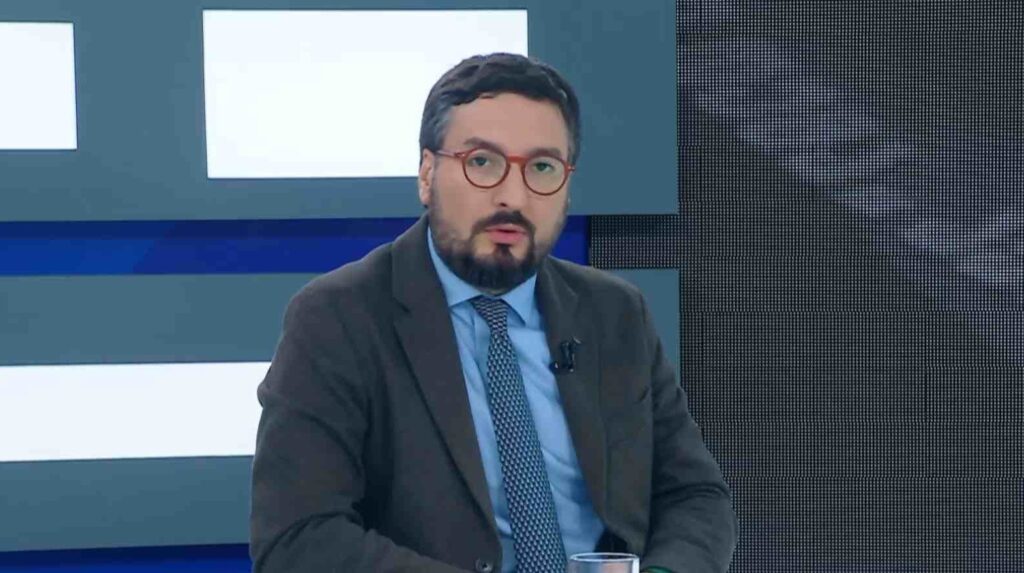
“If they had any real evidence—just one solid piece that supports their claims—do you really believe that Georgian Dream wouldn’t take effective action and arrest those responsible?” questioned Tazo Datunashvili, a Lelo party’s political council member, during his appearance on the GPB First Channel program “Actual Topic with Maka Tsintsadze.”
“Such evidence does not exist, just as there is no deep state, no global war party, and no conspiracy theories orchestrating the struggles of a country that is currently gasping for economic breath,” Datunashvili asserted.
In response to the host’s question regarding the opposition’s inability to unite, Datunashvili pointed out the resulting continuous protests and international non-recognition of the government.
“You may find this acceptable, someone else might not, and perhaps you don’t like the form of unity or coordination that the resistance movement has established, but it is effective. At that table, we have not reached consensus on issues that are challenging to agree upon, where different opinions persist,” he explained.
According to him, Tea Tsulukiani is merely staging a political charade in the investigative commission. He remarked that if Gakharia attended, he only harmed himself and drew undue attention to this misguided spectacle, though that does not preclude future conversations with Gakharia.
“In that unity, we will continue to communicate, discuss issues that bring us together, and refrain from addressing the topics that divide us,” Datunashvili stated.
When asked whether their coalition plans to participate in the local self-government elections, Datunashvili emphasized that their focus is currently on three key components.
“First is the continuation of protests, advancing them to a more robust and potent level—making them broader, more intense, and larger in scale, always ensuring they remain peaceful. The second component is to sustain international non-recognition and intensify sanctions; the third is to present a strong political alternative to the Georgian Dream,” he outlined.
Regarding a decision to participate in the local self-government elections, Datunashvili confirmed, “We are not discussing this now.”
“This is not the right moment for conversations about local self-government elections. We are not addressing this issue at all, and no decision has been made. What is crucial for us now is to focus on securing new parliamentary elections and achieving the release of political prisoners,” Datunashvili asserted.
He also noted their current emphasis on mobilizing and engaging more citizens in active protests, particularly those who are currently passive observers.
“The majority of Georgian citizens are in a dire situation today. One in three Georgians lives in social vulnerability, while another third relies on assistance from abroad due to emigration. Over the past decade, more than a million people have left this country as emigrants, and people do not flee from prosperous nations,” Datunashvili concluded.