


Judge Gvritishvili on live trial broadcast ban: judiciary should operate in professional, businesslike manner
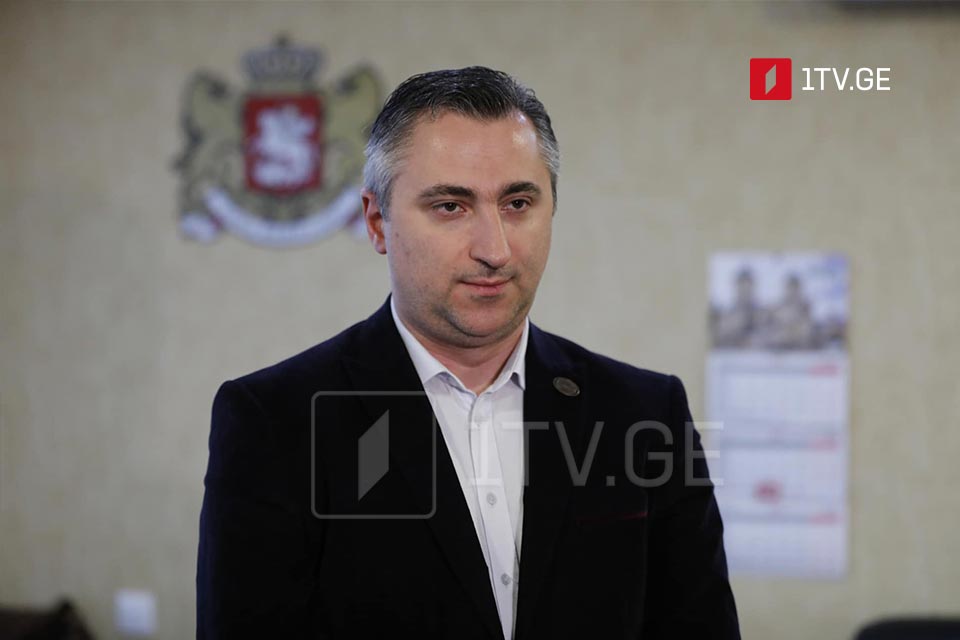
“The independence of the court has not been called into question, including as a result of the legislative amendments made in June-July 2025,” said Judge Dimitri Gvritishvili.
Dimitri Gvritishvili explained the motive for restricting live coverage of trials.
“The restriction of admission of media outlets and live coverage of court sessions, to a certain extent, was motivated by significant and legitimate goals, to ensure that the judiciary is administered and implemented in a professional, businesslike environment. The society witnessed what was happening when video cameras were allowed into the court hall to provide live broadcasts. Everything but the court processes was developing there.
We often refer to the Strasbourg-practised standard, which states that it is not permissible to establish a ‘parallel process’ alongside the judicial one. The court should be a space where a judge considers evidence presented by both sides in a calm and impartial environment and renders a lawful and reasoned decision. Given the circumstances during the live broadcast, this was virtually impossible. Judges were compelled to take measures against those disrupting order, including removing individuals from the courtroom or imposing fines. This requires many human resources, impeding the implementation of the judiciary properly,” he said.
According to Dimitri Gvritishvili, the amendments were reasonable and justified, and they do not restrict coverage mechanisms.
“Video cameras are installed in court halls, and all interested stakeholders can request the footage. They can apply to the court to obtain the footage and give it to the media outlets. Therefore, the function of public control over the judiciary is neither limited nor lost.
Simply put, in the interest of properly administering justice, live broadcasts are not permitted within courtrooms, though the mechanisms for oversight and accountability remain in place,” he said.
When asked about the ongoing issues related to the process, as requesting video footage takes time and can hinder the timely functioning of the media, Gvritishvili responded:
“A lawyer makes remarks. The lawyer, representing the defence, as well as relatives of the charged individuals who attend the proceedings, and other attendees, may provide comments to the media. Regarding the footage, it can be obtained the following day, or even on the same day if available, and the media are then free to publish it,” he said.
Commenting on the ban on mobile phones, Gvritishvili stated that ‘The regulation is general, with possible exceptions.’
“By regulations, I mean the legislative framework adopted by the parliament, followed by a normative act approved by the High Council of Justice. While it is true that no exceptions have been established, I do not understand why this issue has become relevant now, given that the regulation has been in force since June. Neither lawyers nor journalists have had any problems leaving their mobile phones for several months already.
The content of the regulation is one matter, but its enforcement is another. The confiscation of a mobile phone pertains to enforcement. Based on the same regulation, security officers, in coordination with their supervisor, make decisions. They are authorised and obliged to confiscate the phone of any individual, whether a lawyer, journalist, or visitor. To date, no such incidents have been observed. We are referring to exceptional cases where specific circumstances or cases require security officers to confiscate a mobile phone under the law, if there is reasonable doubt that the device could be used unlawfully to facilitate illegal filming or recording, and measures are taken to prevent this. Despite the parliament’s prohibition on filming, the public has repeatedly seen covert recordings of court hearings. This is precisely why it became necessary to adopt a regulation,” he said.