


Infrastructure Minister names enhancement of educational infrastructure as government priority
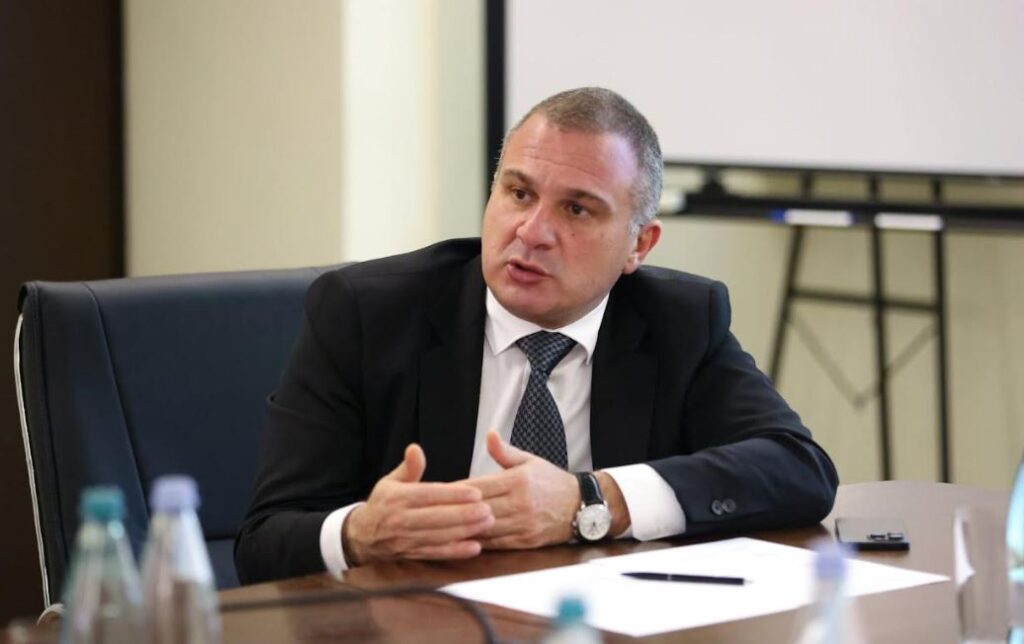
“Improving educational infrastructure remains one of the government’s key priorities,” stated Revaz Sokhadze, Minister of Infrastructure of Georgia, during his discussion on the state of educational facilities on the Moambe Regions programme.
As Sokhadze highlighted, the current situation poses significant challenges, which the government openly acknowledges and is actively endeavouring to address.
The minister explained that the responsibility for constructing educational infrastructure was entirely transferred to the Ministry of Infrastructure, following a government decision in September last year, after the ESIDA agency, which had previously managed school construction projects, was abolished.
“When these responsibilities shifted to the ministry, we encountered a rather harsh reality: disorganised documentation, stalled construction work, incomplete or sometimes non-existent projects,” the minister remarked.
He further expressed the ministry’s shared frustration with parents and students, emphasising that for years, children have often been deprived of the opportunity to receive proper, comprehensive education.
“This represents one of the most pressing challenges and a top priority for the state, which we address daily,” Sokhadze affirmed.
The minister clarified that while the Ministry of Education sets the strategic priorities, the Ministry of Infrastructure is responsible for implementing the relevant projects. He added that the ministry maintains active communication with local communities and ensures transparency throughout the process.
Regarding upcoming initiatives, the minister announced that a tender for the construction of the Manavi school will be launched in the coming days, with rehabilitation works commencing as soon as the successful bidder is selected.
Concerning the Mokhisi school, he noted that relevant procedures are underway: an assessment of the building’s condition by the National Bureau of Expertise will determine whether the existing structure requires renovation or if a new school should be built.
The minister also acknowledged that similar issues are widespread, not only in regional areas but also within the capital. To address this, the ministry has decided to develop standardised project templates for schools, which will significantly speed up the construction process.
“The availability of ready-made plans will enable us to avoid delays caused by individual design work for each school, allowing projects to progress much more swiftly,” he explained.
Sokhadze reiterated that the construction and refurbishment of schools remain central priorities for the government, with numerous state agencies involved to ensure the smooth advancement of these projects.
He concluded by emphasising that the ministry is committed to working tirelessly to resolve longstanding issues promptly and to fostering a conducive environment for quality education for all students.