


Health Ministry: Georgia to submit hepatitis B and C elimination report to WHO
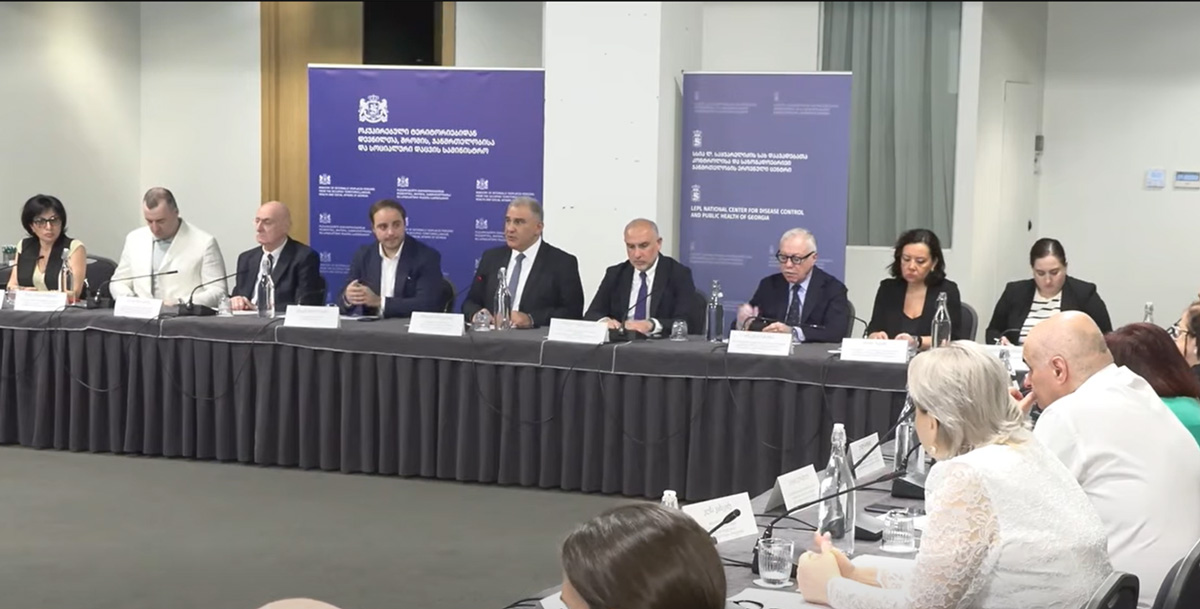
Georgia is preparing to submit its national validation report on viral hepatitis elimination to the World Health Organization (WHO), highlighting progress achieved in eliminating hepatitis B and C, the Ministry of Internally Displaced Persons from the Occupied Territories, Labour, Health and Social Affairs said.
The second meeting of the National Council for Validation of Viral Hepatitis Elimination was held under the chairmanship of Georgia’s Health Minister Mikheil Sarjveladze.
According to the ministry, Georgia’s achievements in hepatitis B and C elimination are ready for international assessment. The national validation report is expected to be submitted to the WHO in the coming days.
The report covers two main areas: validation of progress toward hepatitis C elimination and validation of the elimination of mother-to-child transmission of hepatitis B. Georgia is seeking the highest, “Gold Tier,” level of international recognition in both areas.
Council members reviewed the final draft of the national validation report to be submitted to the WHO.
According to the data included in the report, 88.5% of people living with chronic hepatitis C have been diagnosed, while 87.1% of those diagnosed have started treatment — both figures exceeding WHO targets. The hepatitis C cure rate has reached 99%.
Significant progress has also been made in hepatitis B control. Georgia has already met WHO regional targets, with the prevalence of hepatitis B among children standing at 0.03%. Coverage of the hepatitis B vaccine administered at birth has reached 95.5%, while coverage for the three-dose vaccination schedule stands at 90.5%.
Council members unanimously approved the presented draft version of the validation application. The meeting highlighted Georgia’s measures to eliminate viral hepatitis as a major public health achievement.
According to the ministry, the results achieved since 2015 reflect sustained and large-scale efforts in the field. During this period, Georgia established a strong national program, significantly reduced the burden of hepatitis C, achieved WHO regional targets for hepatitis B control, and developed the policies, services and surveillance system needed to ensure the program’s long-term sustainability.
“Georgia has all the key prerequisites to become one of the first countries in the world to receive the World Health Organization’s highest-level international recognition for viral hepatitis elimination — the Gold Tier.
“This achievement is the result of consistent state policy, the many years of professional work of Georgian specialists and effective cooperation with international partners,” the ministry said.