


Giorgi Baramidze: I apologize to those who fell for Russian propaganda, I never expressed sentiment they’re trying to attribute to me
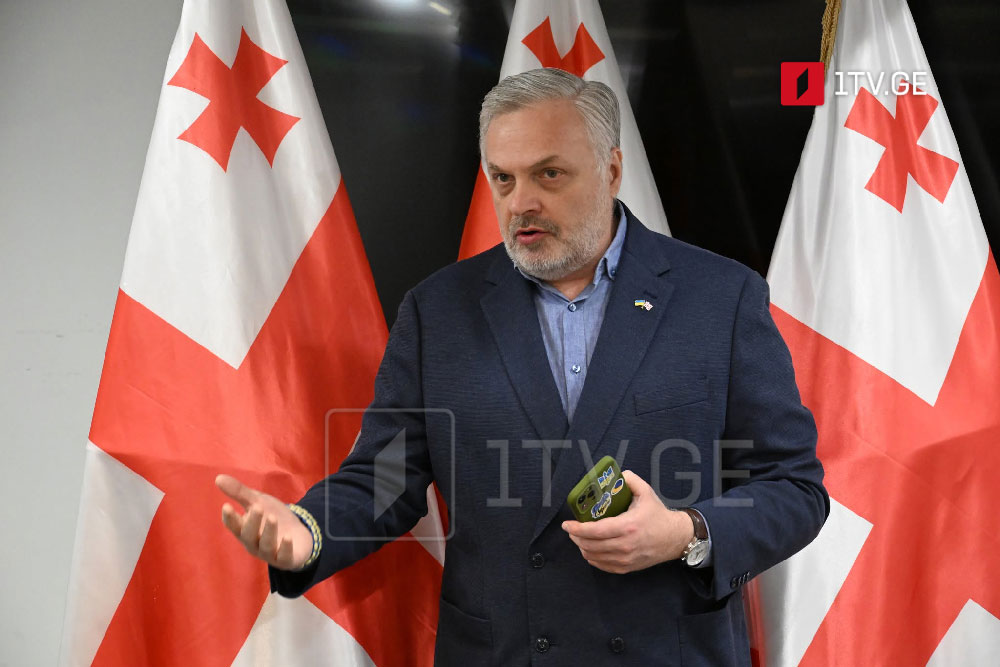
“I feel uncomfortable having to talk about this. I am not a traitor to my homeland. I apologize to those who fell victim to this propaganda, those who were misled by Russian propaganda, and those who did not watch my interview and were emotionally affected by it,” United National Movement member Giorgi Baramidze said at a court hearing.
According to Baramidze, a “dirty case” based on rumors has been brought against him and the Prosecutor’s Office is carrying out the orders of a Russian oligarch.
“First of all, it is necessary to note that this process is caused by the fact that Georgia has been seized by that Russian oligarch who, when I was fighting against the Russians in Abkhazia — whether I fought or did not fight is irrelevant in this case, many people know about it, although some people here, whom I have never had any contact with, are discussing how many times I was there or how many times I was not there — when I was fighting against the Russians in Abkhazia, he was making millions together with the Russians.
“This person’s revenge is directed both against Georgia and against me, because he hates people like this, as they stand in the way of carrying out the task he has received from Putin — to subordinate this country to Russia, to hand over the occupied territories and, ultimately, all of Georgia to Russia. This is the context of everything that is happening today,” Baramidze said.
Baramidze also accused the Prosecutor’s Office of failing to respond to what he described as statements damaging Georgia’s reputation and international standing.
“Why is it that the Prosecutor’s Office does not react when this regime accuses the homeland of starting the war, or when this regime accuses the homeland of bombing Tskhinvali while it was asleep? Why did you not say anything when this regime, its main oligarch and dictator, says that we have to apologize? Why did you not remember Georgia’s international authority and prestige then? No, you remember these things when you are instructed to take steps against people who have devoted their lives to serving the country,” he said.
Baramidze said he regretted using the word “executing” in his earlier remarks about the 1992-1993 armed conflict in Abkhazia.
“The word ‘executing’ creates an association, and I should not have said it. I should have been more careful. I accept this criticism, but I did not mean what they are trying to attribute to me. At the beginning, I said that we had no prisoners. If we had no prisoners, then no one could have been taken to a wall. Accordingly, you could not shoot anyone in that sense. Our people were fighting in battle,” Baramidze said.
“I feel uncomfortable having to explain that I am not a traitor to my homeland. If anyone understood it that way, I apologize to them — to those who fell victim to this propaganda, those who were misled by Russian propaganda, those who did not watch my interview and were emotionally affected by it. Apparently, I was accused of blaming our people and our army,” he said.
Baramidze said he had no intention of fleeing the country and had no means of influencing anyone, arguing that there was therefore no grounds for his detention.
“I was not planning to flee anywhere and I am not planning to flee anywhere. I have no objective means of influencing anyone. Accordingly, there is no need for me to be imprisoned for anyone other than the Kremlin, Putin and Putin’s Russian oligarch servant,” Baramidze said.
The Tbilisi City Court ordered Baramidze’s pretrial detention.
The Prosecutor’s Office of Georgia arrested Gia Baramidze, a senior leader of the opposition United National Movement (UNM) and former Minister of Internal Affairs and Defence (2003–2004), pursuant to a court warrant on charges of state treason, specifically manifested through sabotage. The charge carries a prison sentence of up to four years.
According to the Prosecutor’s Office, Iago Khvichia’s author program ‘The Birth of Georgia’ in July this year, Giorgi Baramidze claimed that during the initial stage of the 1992–1993 armed conflict in Abkhazia, representatives of the Georgian armed forces did not take prisoners and executed them on the spot.
The Prosecutor’s Office said that by making the statement, Baramidze accused Georgia’s armed forces of violating international humanitarian law and committing serious war crimes.