


Georgia’s PM: Why was the “agent network” quiet after 2008 war, but ordered to spread Russophobia now that a friendly nation is attacked?
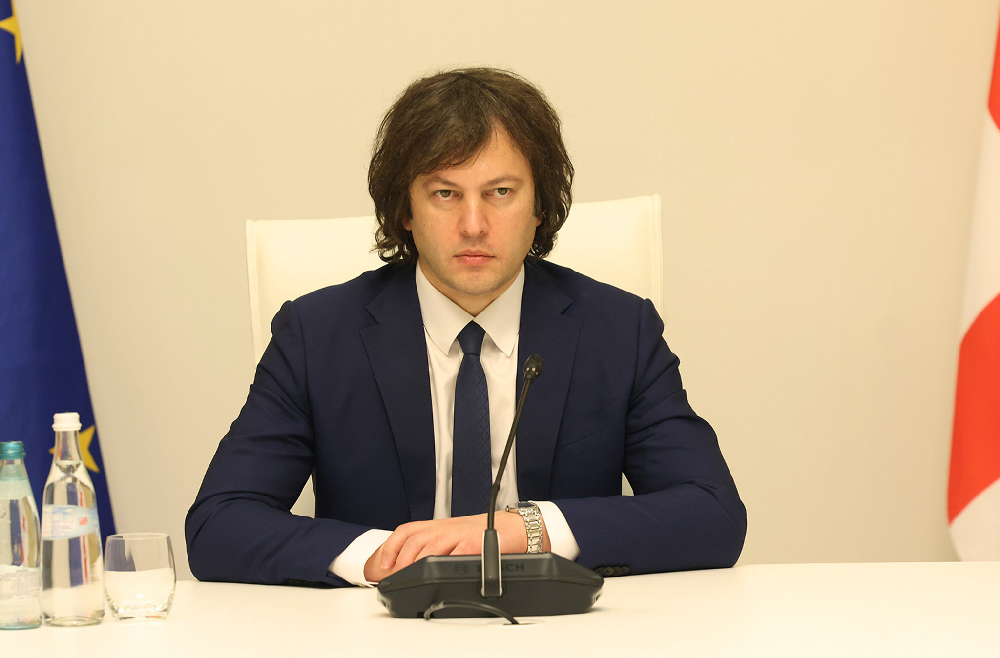
“In 2022, following the outbreak of war in Ukraine, a distinct approach emerged within the opposition-aligned, pseudo-liberal minority of our society that warrants separate examination,” writes Chairman of Georgian Dream and Prime Minister, Irakli Kobakhidze, on social media.
“As you are aware, as a consequence of the crimes committed by the United National Movement regime against its own state and people, Russia occupied 20 per cent of Georgian territory. Eighteen years have passed since the August 2008 war, yet its severe scars remain visible across our country and in the lives of tens of thousands of Georgians to this day.
Russian military aggression resulted in the deaths of 412 individuals and left 2,232 wounded; 30,000 of our fellow citizens were forcibly displaced from their ancestral homes; and over 120 Georgian settlements were left beyond the occupation line. Before our motherland and our history, we are duty-bound to recognise that these figures are not mere statistics, for behind them lie what is most precious: lost lives, abandoned and destroyed villages, and national interests sacrificed to betrayal.
Intriguingly, against the backdrop of a tragedy of this magnitude, the August war failed to serve as a sufficient basis for the United National Movement regime and its followers to adopt a radical stance towards Russia between 2008 and 2012. In reality, the opposite occurred: following Russia’s occupation of Georgian territories in 2008 and its recognition of Abkhazia and South Ossetia as independent states, the United National Movement did not pursue a strict policy towards Russia. On the contrary, shortly after the war ended, the regime’s leader personally met Russian citizens at the border, inviting them to Georgia for tourism and business activities. During this same period, we witnessed active efforts by the regime to deepen cultural and humanitarian ties with Russia, alongside the United National Movement government encouraging the involvement of Russian capital across various sectors of the Georgian economy, including strategic ones. A few years later, they unilaterally abolished the visa regime for Russian citizens.
Allow me to remind you that neither representatives of the United National Movement regime nor their followers voiced any protest against this policy at the time. Furthermore, we all remember how today’s self-appointed leading ‘Russophobes’, Elene Khoshtaria, Zurab Japaridze, Misha Mshvildadze, and others, welcomed Russian tourists, Russian money (which back then ‘did not stink’), and the deepening of trade, economic, and cultural relations with Russia.
Mind you, all of this transpired after Russia had already recognised the independence of Abkhazia and South Ossetia, and diplomatic relations between the two countries had been severed,” states Kobakhidze.
According to the Prime Minister, the political forces and affiliated NGOs that formed a unified radical bloc were unbothered by anti-Russian aggression between 2008 and 2012; Georgian foreign agents developed radical anti-Russian sentiment only after Russia invaded Ukraine for a second time.
“It is a fact that these political forces, their affiliated NGOs, and other active followers, who formed an externally controlled network of foreign agents, a unified radical force, and have repeatedly proven that they operate solely to advance the interests of external actors in Georgia, were unperturbed by anti-Russian aggression between 2008 and 2012. The Georgian network of agents adopted radical anti-Russian sentiment only after Russia invaded Ukraine for a second time.
Evidently, the Global War Party required a conflict on the scale of today’s hostilities to draw Europe into war and to inflame Russophobia among its foreign agents worldwide, including in Georgia, to the highest degree. To speak plainly once more: the rhetoric of the foreign agents towards Russia was never this harsh or hostile before the 2008 war or following the August war, that is to say, when the matter directly concerned their own (at least formal) motherland; when Russian occupation claimed the lives of hundreds of Georgian soldiers, police officers, and civilians; when Giorgi Antsukhelidze was tortured to death; when we lost more than 120 Georgian villages; when tens of thousands of our citizens were displaced; and when something occurred that Russia had not previously even contemplated: the recognition of the so-called independence of Georgia’s occupied territories.
Foreign agents declared Russia an implacable enemy only after it invaded Ukraine for a second time. Were we talking about citizens of Ukraine, this would, of course, be entirely understandable. However, it appears that the ‘stateless’ individuals holding Georgian citizenship grieve more for Ukraine than for Georgia, simply because that is the directive they have received. Paradoxically, yet indisputably, in their view Russia became a genuine occupier of Georgia not after occupying Georgian land, but after occupying Ukrainian land.
Naturally, these emotions of theirs are entirely fake, as foreign agents are completely devoid of values; a fact they have demonstrated time and again. Nevertheless, a logical question arises: why have they turned into Russophobes now, rather than when Georgia itself was concerned? Do they fail to recognise Georgia as their motherland even on paper, viewing Ukraine as their true home instead?
Logically, if anyone were to develop a radical anti-Russian posture, it ought to have occurred after 2008, not 2022. That their present-day Russophobia is disingenuous is borne out by concrete facts. To put it bluntly, we all know that these self-proclaimed ‘Russophobic’ politicians, NGOs, journalists, and activists have zero reaction when millions of Russian roubles are wired directly into Elene Khoshtaria’s account from the Russian state treasury. I believe the matter I am addressing requires absolutely no further explanation for the vast majority of Georgian people.
The vast majority of our country’s population are genuine patriots, as reflected clearly in their mandate to the government: to protect peace, state sovereignty, and national values at all costs. However, I consider it essential to raise a question that the public must reflect upon.
We all know that, both in the past and today, foreign agents in Georgia act according to instructions from external forces, and their true allegiance lies not with Georgia, but with the Deep State. Against this backdrop, it is telling to ask: why were they not instructed to promote Russophobia when the most compelling reason existed, namely, after the August 2008 war, and why have they been tasked with Russophobia now, when the victim of Russian aggression is not their formal motherland, but another, albeit friendly, nation? I trust the public will easily find a logical explanation for this glaring inconsistency,” Irakli Kobakhidze concludes.