


Georgian Parliament Speaker: We have yet to fully process Europe’s scale of intervention in our 2024 elections
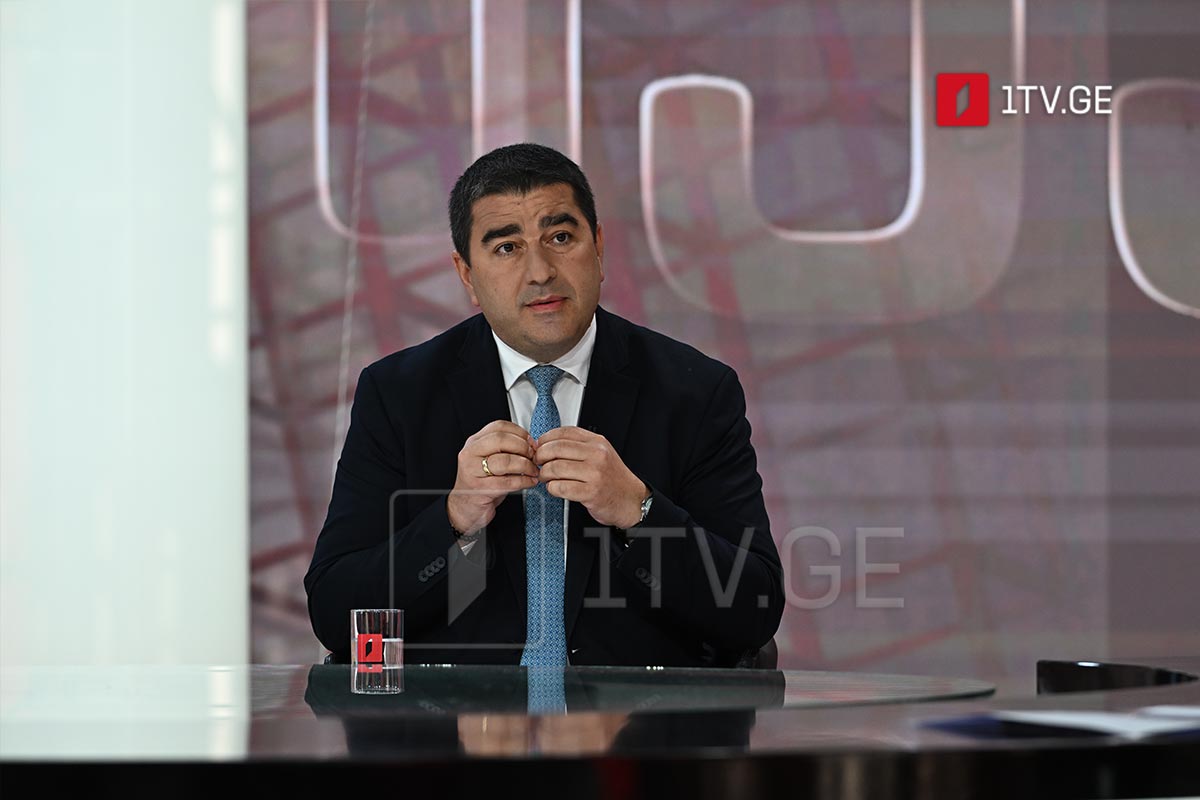
“When we speak of an institutional crisis in Brussels, we mean a regression in core values and the execution of ordered, harmful political agendas,” the Speaker of the Georgian Parliament, Shalva Papuashvili, has criticised European institutions, pointing to an ‘institutional crisis in Brussels’ marked by values-based regression, opaque political funding, and widespread foreign interference in Georgia’s 2024 parliamentary elections.
Speaking on GPB First Channel’s current affairs programme Discussion on Topical Issues, Papuashvili addressed questions regarding recent comments by Azerbaijani President Ilham Aliyev, who described the European Parliament as a hub for bribery, and whether criticising European bodies risks discrediting EU institutions as a whole.
“What President Aliyev stated regarding corruption aligns with what we have highlighted on numerous occasions, supported by indirect evidence,” Papuashvili said. “Regrettably, external political funding within the European Union remains opaque; they have not attained the legislative standards established in America or Georgia. In the US, the Foreign Agents Registration Act (FARA) applies, and through FARA disclosures, we occasionally uncover stories linked to Europe.
Two years ago, a FARA report revealed that lobbyists from an American firm were drafting resolution texts for the European Parliament concerning Georgia. Consequently, such resolutions demanded the release of Mikheil Saakashvili, a dictator currently serving a lawful sentence for his crimes. Financial interest and corruption inevitably lay behind this. We saw a Vice-President of the European Parliament arrested, with large sums of cash seized, along with involvement from other officials, including a former EU Commissioner for Justice.
When I became Speaker in 2022, following our formal EU membership application, I visited Brussels and met that very commissioner, who lectured me on judicial reform. Less than two years later, large sums of cash were seized from his residence amid corruption allegations. This was no low-level official, but a European Commissioner. Naturally, we harbour serious doubts regarding both political corruption and financial-political corruption, which has manifested repeatedly in Brussels,” the Georgian Parliament Speaker explained.
The Parliament Speaker made these remarks in response to a question from the show’s presenter. The host had asked whether, in light of President Ilham Aliyev’s statement earlier today calling the European Parliament a “den of bribe-takers” and referencing the Qatargate scandal, it was dangerous to discredit European institutions as a whole over isolated corruption cases in the European Parliament, particularly at a time when the EU body evaluates Georgia’s democracy, corruption, and rule of law, while the Georgian government in turn criticises European institutions.
Papuashvili asserted that Georgia no longer expects adherence to international standards from certain European governments and Brussels, describing their actions as driven purely by political objectives.
“It all comes down to routine political agendas pursued with varying levels of blunt force. Some are subtle, others crude, but the core objective never changes: a specific political outcome is targeted and pursued ruthlessly. Regarding Georgia, that objective to replace the Georgian government by any means necessary, employing both lawful and unlawful, legitimate and dirty methods, was made transparent in 2024.
We still haven’t fully digested the sheer level of meddling we faced in 2024 from various European governments and institutions. We must force ourselves to confront it, because human nature leads us to put past dangers out of mind once they pass. But recall the reality: record sums poured in from the EU and European capitals, with opposition parties directly bankrolled through underhand schemes.
The Danish state was actively financing opposition election campaigns. We called it out, but the Danish Ambassador didn’t grant us, or the Georgian public, so much as a single word of response. Nothing changed until the scandal erupted in Denmark itself over their taxpayers’ money funding our opposition. The second it hit their press, they panicked and terminated the project immediately. It later transpired that the entire team behind this NGO cover migrated en masse straight into the Lelo party as “Freedom Square” after running their campaigns on foreign cash. And don’t get me started on the blatant post-election meddling by foreign ambassadors and politicians.
Let me remind everyone: on 12 November, right after the vote, senior MPs and officials from seven European states- the Baltics, Nordics, France, and Germany- stood on Rustaveli Avenue egging the public on towards a Maidan. One politician openly shouted, “Get out there and build a Maidan!” Let me remind you what a Maidan actually entails: a hundred dead protesters in the streets. That is what European leaders were inviting us to do. After whipping up their activists in Georgia, an assault was launched on Parliament, followed a year later by a storming of the presidential residence. Yet to this day, not a single one of these figures has offered an apology or even distanced themselves from these acts,” Papuashvili concluded.