


FM on EU candidate status: They told us Georgia won’t get it, awaiting 85% pro-EU public’s response to GD
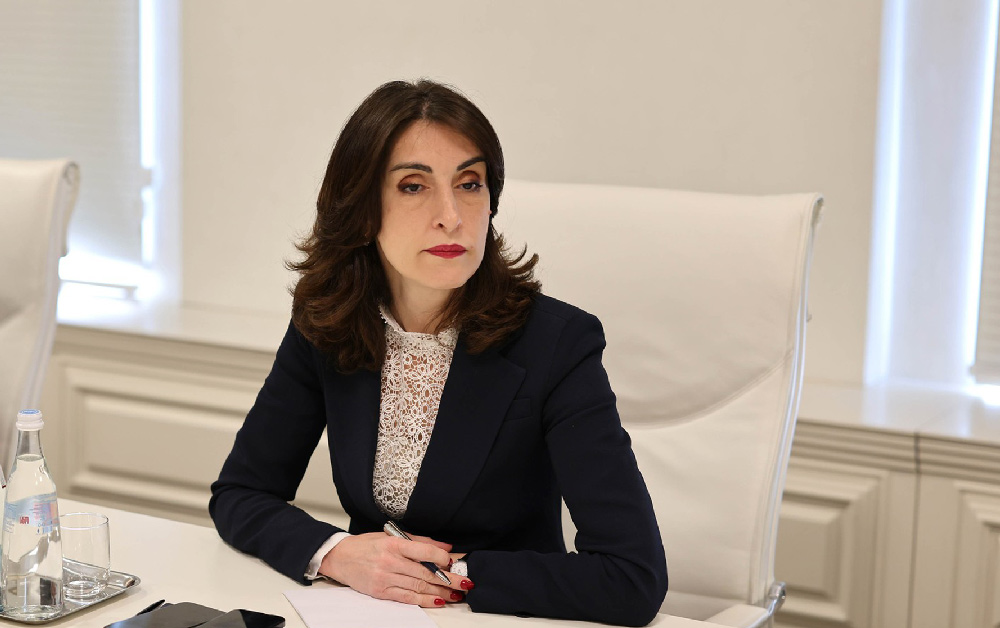
“After we submitted our application to the European Union, I recall several meetings in March when it was explicitly stated regarding Georgia: ‘You have submitted your application, now we’ll see – Moldova and Ukraine will receive candidate status, Georgia will be the country that doesn’t receive status, and let’s see how that 85 per cent of the population that supports EU integration responds to the Georgian Dream government,'” Georgia’s Foreign Minister Maka Botchorishvili declared at a session of Parliament’s temporary investigative commission.
According to Maka Botchorishvili, Georgia was leading among the candidate countries. As she stated, this was a fact that no one could oppose; therefore it was necessary to create a perception. Politicians, non-governmental organizations, and the media were actively working toward this goal.
“When we submitted our application, we understood the challenges Georgia might face in European integration because we deeply value what Europe represents for our country—our nation and our people: connection to Europe and belonging in Europe. I avoid the term ‘Europeanization’ because I believe Georgia is inherently European; the Georgian people are Europeans and have contributed to European history just as others have. From this perspective, it was clear that certain forces could have exploited this crucial issue to serve interests contrary to Georgia’s goal of EU membership. Unfortunately, that is exactly what has happened.
I remember my meetings vividly. I was quite active, frequently visiting the European Parliament and engaging with colleagues there, regardless of their stance toward Georgia or the Georgian Dream government. I believe in maintaining relationships and open communication with everyone. Many insights emerged from these interactions. After submitting our application, I recall several meetings where it was explicitly stated: “I know you submitted your application; now we’ll see—Moldova and Ukraine will receive candidate status, and Georgia will not.” This was around March, shortly after our application. They also mentioned observing how 85 per cent of the population supporting EU integration would respond to the Georgian Dream government.
This clearly stated proposition revealed that, for some individuals, European integration—such an important issue for Georgia—was merely a tool to achieve a different goal: changing the government in Georgia by any means necessary. By 2022, there was no longer a realistic prospect for elections, and I will probably address this later—specifically the 2020 elections. The constitutional pathway for changing the government had effectively closed, and naturally, the scenario of an unconstitutional change of government was already fully underway. It became necessary to find justifications that could be used against the Georgian state. I would frame it this way—I do not see it as being directed solely against the Georgian Dream government, because this was a government elected by the Georgian people.
What is particularly intriguing is how this process has been orchestrated within Georgia’s political landscape.
There were three main avenues: politicians involved in the process, whose statements we observed being made openly in Parliament; non-governmental organizations that actively crafted narratives and frameworks to support this agenda; and the media, which became highly engaged on the external front,” the minister declared.
According to Maka Botchorishvili, Georgia was leading among other candidate countries in reforms and achievements, therefore it was necessary to create a false perception that our state didn’t deserve this.
“Everyone is well aware that EU integration is fundamentally a political process, but it is naturally grounded in the specific achievements of each state. Among the three candidate countries—Ukraine, Moldova, and Georgia—Georgia was clearly leading. This was an undeniable fact that no one could contest. Consequently, it became essential to shape a particular perception. Politicians, non-governmental organizations, and the media—all three sectors—began actively engaging in this effort,” stated Maka Botchorishvili.