


FM Botchorishvili: Our shared responsibility is to ensure every child grows up in peace and safety
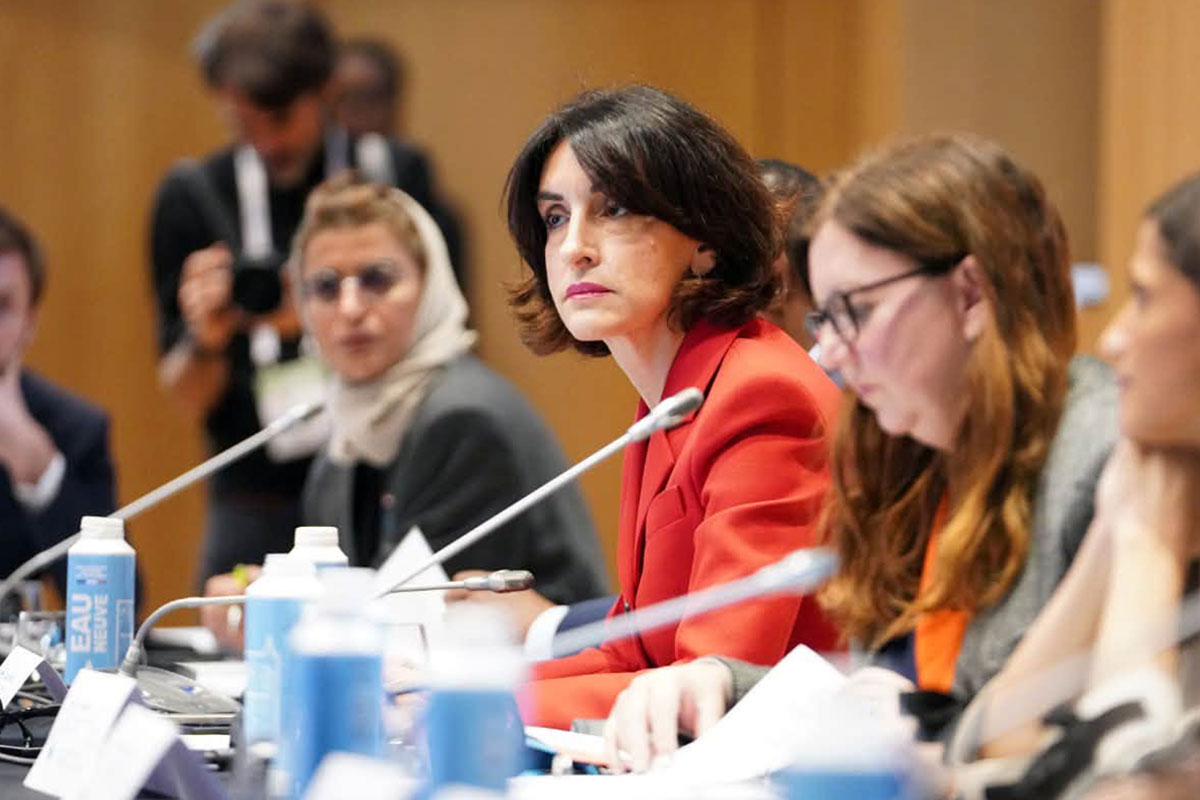
“It is a pleasure to represent Georgia at the Paris Peace Forum. For my country, peace carries particular significance. That is precisely why the opportunity to come together here, to discuss peace and the challenges it faces, is so important to us. I represent Georgia — a country that, amid a complex geopolitical environment, continues to face security challenges and risks, and has experienced first-hand the devastating consequences of war and conflict over the past three decades,” Georgia’s Deputy Prime Minister and Minister of Foreign Affairs, Maka Botchorishvili, said in her address to the Paris Peace Forum.
According to Botchorishvili, the central topic of today’s discussion is children – innocent victims of conflicts who did not choose to be in this situation. The Minister said that their rights must be protected, their dignity respected, and their future secured.
“At the heart of today’s discussion are children — innocent victims of conflicts they did not choose. Their rights must be protected, their dignity upheld, and their future safeguarded. This is not a responsibility that can be left to individual countries. It is a shared responsibility of us all. Georgia knows from its own experience that the consequences of conflict do not end when the fighting stops. They extend far beyond immediate destruction and loss of life, affecting generations and shaping the lives of people long afterwards. And this is not simply a chapter in our history.
The Russian occupation of two Georgian regions continues to affect the lives of children to this day, with serious restrictions on their fundamental rights remaining part of their everyday reality. Restrictions on children’s right to education in their native language, coupled with the forced imposition of a Russian-language education system, undermine not only their access to education but also their identity, culture and connection to their own country. This is why protecting children in conflict situations must be seen not only as a humanitarian imperative, but as a fundamental matter of human rights, security and lasting peace.
Over the past decade, preventing conflict and preserving peace have been central to Georgia’s national priorities. This has enabled our country to focus on development, improve the well-being of our people and create better prospects for future generations. Our experience has only reinforced one fundamental conviction: peace is much more than the absence of fights. It creates the conditions in which societies can move forward — invest in education, healthcare and social services, advance technological innovation, and, above all, give children and young people the opportunity to grow, thrive and realise their full potential. Our ambition is to make these opportunities accessible to every child and every young person, regardless of where they live or the circumstances they face. Yet, this remains an aspiration for children and young people living in Georgia’s occupied territories. Their daily lives are still marked by restrictions on fundamental rights and barriers that deprive them of opportunities and limit their prospects for a secure and fulfilling future. This reminds us of a fundamental truth: the cost of unresolved conflicts cannot be measured solely in territorial divisions or political disagreements. It must also be measured in lives affected, opportunities lost and the future denied to an entire generation.
Protecting peace, therefore, means looking beyond the immediate challenges of today. It means creating the conditions in which the next generation can grow up in safety and freedom, enjoy equal opportunities and have the ability to shape its own future.
For Georgia, peace is a conscious choice, shaped both by our own historical experience and by the conflicts and security challenges that continue to affect our region. But preserving peace requires commitment, determination and shared responsibility. The responsibility we share today is to ensure that peace is not merely an aspiration, but a reality that future generations can experience — a reality in which every child, everywhere, can grow up in safety, enjoy their rights and have the opportunity to build a better future,” the Minister stated.