


Elon Musk shares article citing Georgia as an example of ‘colour revolutions’; USAID spent USD 26 million in 2008–2025 on supporting political processes
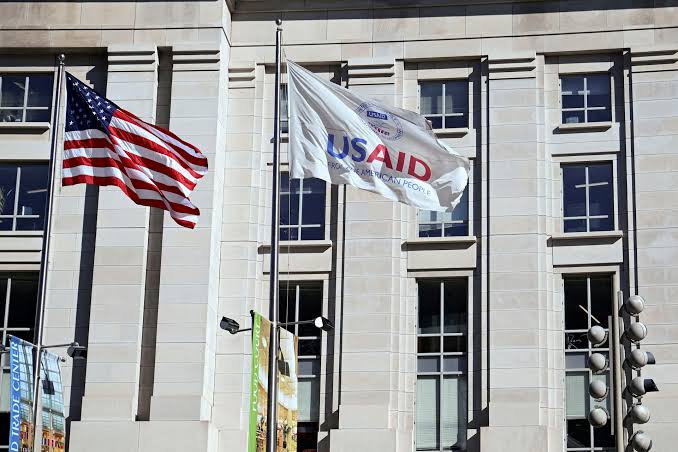
American billionaire Elon Musk has shared an article claiming that USAID built a ‘global network of colour revolutions’, citing Georgia as an example.
According to the article, USAID was one of Washington’s primary instruments for changing regimes abroad.
“Beneath humanitarian programmes, cultural initiatives and development projects lay a much larger objective: managing regime change and ‘colour revolutions’ across the globe,” the article states.
According to the article, recipients of funding included media outlets, lawyers, election monitors, activist training programmes and governance databases.
According to the article, Georgia is the country where this entire process unfolded in public, making it possible to trace its trail right there.
The article notes that from the mid-1990s, American and European funding developed all five capabilities within Georgian civil society.
“USAID and the Eurasia Foundation funded Rustavi 2, an independent broadcaster that by 2003 had become the opposition’s main media outlet. Founded in 1996, the Liberty Institute drafted Georgia’s freedom of speech legislation and ran anti-corruption campaigns. ISFED, which was founded in 1995 with funding from USAID and NED, trained 3,000 election monitors and conducted parallel vote counts across ten elections in Georgia. NED spent USD 3 million on Otpor in Serbia, whose trainers then came to Georgia, funded by Open Society, facilitated by the Liberty Institute, and trained a student group called Kmara. Same manual, same clenched-fist logo, different country,” the article states.
According to the article, 16,000 projects were funded in Georgia by the foundation. According to the article, in November 2003, all five factors acted simultaneously. ISFED’s parallel vote count confirmed that the parliamentary elections had been rigged. Rustavi 2 broadcast the evidence. Kmara filled the streets, while the Liberty Institute provided the organisational base. Three weeks later, following the “Rose Revolution”, President Shevardnadze resigned.
“After the revolution, members of the Liberty Institute entered the Georgian government: Bokeria to the National Security Council, Subari to the post of Public Defender, Targamadze to the Defence and Security Committee, Vardzelashvili as Deputy Minister of Justice, Zhvania to the Foreign Intelligence Service, and Minashvili as Chair of the Foreign Affairs Committee. These organisations did not merely support the transition period; they staffed it themselves with personnel,” the article states.
According to data from USASpending.gov, from 2008 to 2025 USAID allocated more than a billion dollars to Georgia. Contract descriptions directly state that out of this sum, the “Consortium for Elections and Political Process Strengthening” (CEPPS) received USD 26 million “for supporting Georgia’s elections and political processes”.
According to the article, twenty years later, the Georgian government introduced a law obliging non-governmental organisations to disclose foreign funding. The same network was activated: foreign-funded non-governmental organisations held several waves of protests, and hundreds of thousands of people took to the streets, which former U.S. Ambassador Ian Kelly explained in these terms: “Civil society is the absolute beating heart of Georgian democracy… it relies quite a bit on EU and U.S. funding.” The Georgian government’s response was direct: “foreign-funded non-governmental organisations staged the 2003 colour revolution, and the same infrastructure was activated again when the government tried to expose who was paying them,” the article states.
https://t.co/ejBWooREBX
— DataRepublican (small r) (@DataRepublican) June 24, 2026