


Constitutional Court rejects UNM’s motion in case seeking to ban opposition parties
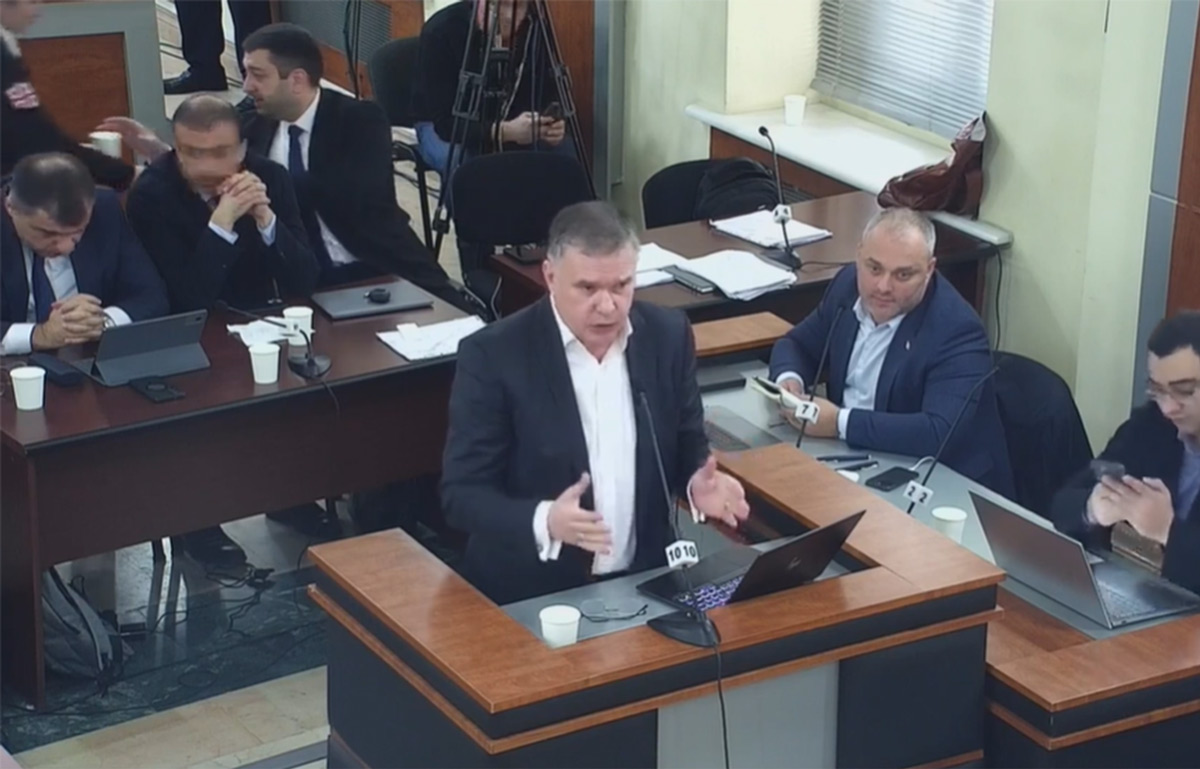
The Constitutional Court has rejected a motion filed by the United National Movement, which was also joined by the other respondent parties.
Specifically, Zaza Bibilashvili addressed the Court with a motion requesting that, before reaching a decision on the merits of the case, the Constitutional Court issue a ruling or provide a written clarification defining the following in the case concerning the banning of political parties: the subject matter of proof with respect to each respondent; the rules for allocating the burden of proof, taking into account the presumption that the activities of political parties are constitutional; the standard of proof; and the standards for assessing evidence.
Zaza Bibiliashvili noted that the formulation of the clear and convincing evidence standard was insufficient and imprecise and, more importantly, that applying it in the present case would be unconstitutional.
“If a decision-making standard is to exist, we need to know what that standard is for us, what we need to defend ourselves against, and what standard we need to use to defend ourselves. If, as the proceedings progress, I do not know what I am being accused of, on what grounds I need to defend myself, and what would be sufficient for you to dismiss this allegation, then a final decision under circumstances where your decision cannot be appealed means that we are being deprived of a fundamental procedural right.
You skipped the stage of disclosing the evidence. You said that you would examine the evidence during the question-and-answer stage, but you have not disclosed it. I am asking you to establish clear, understandable and foreseeable criteria for the parties in advance, specifying what we are being accused of and what standard we must meet in defending ourselves. Neither I nor any of the others are required to respond to some 200,000 things. Even one question is enough to show that the proceedings are going in the wrong direction,” Zaza Bibiliashvili said while substantiating the motion.
The Plenum deliberated on the motion on the spot and rejected it. Revaz Nadaraia, Chair of the panel of judges, explained the circumstances underlying the decision.
According to Revaz Nadaraia, the motion was unsubstantiated, as the Court cannot determine in advance what evidence it will rely on in either direction.
At the same time, Revaz Nadaraia explained that if either party believes a particular question is not relevant to it, it may state so.
“We are asking questions and are not assessing anything yet,” Revaz Nadaraia noted.
According to Revaz Nadaraia, the motion suggests that the party wants the Court to tell it in advance what evidence it will use and for what purpose.
“The party practically does not agree with and is challenging the rulings previously issued by the Plenum in response to the parties’ motions at this stage of the proceedings. The Court’s and the Plenum’s rulings are not subject to review. As for the issue of the standard of evidence, it is somewhat apparent that the party wants the Court to tell it in advance what evidence it will use, for what purpose and with what objective, whether in terms of granting or dismissing the claim. This is inconceivable.
Your explanations have clarified this matter. It is inconceivable for the Court to assess certain evidence in advance and tell a party that this is clear and convincing, that it substantiates the allegations presented in the claim, or that it does not. General standards are not established through interim decisions; they are established through final decisions in a case. This standard will certainly not be a low one,” Revaz Nadaraia said.
Revaz Nadaraia also noted that the judges’ questions mainly concern factual circumstances.
The Constitutional Court is considering a constitutional lawsuit filed by Georgian Dream, which seeks to declare the activities of the United National Movement, Coalition for Change, Strong Georgia – Lelo, the Federalists, and Gakharia for Georgia unconstitutional and ban them.