


Amendments to Law on Grants establish criminal liability, and external lobbying becomes punishable offence
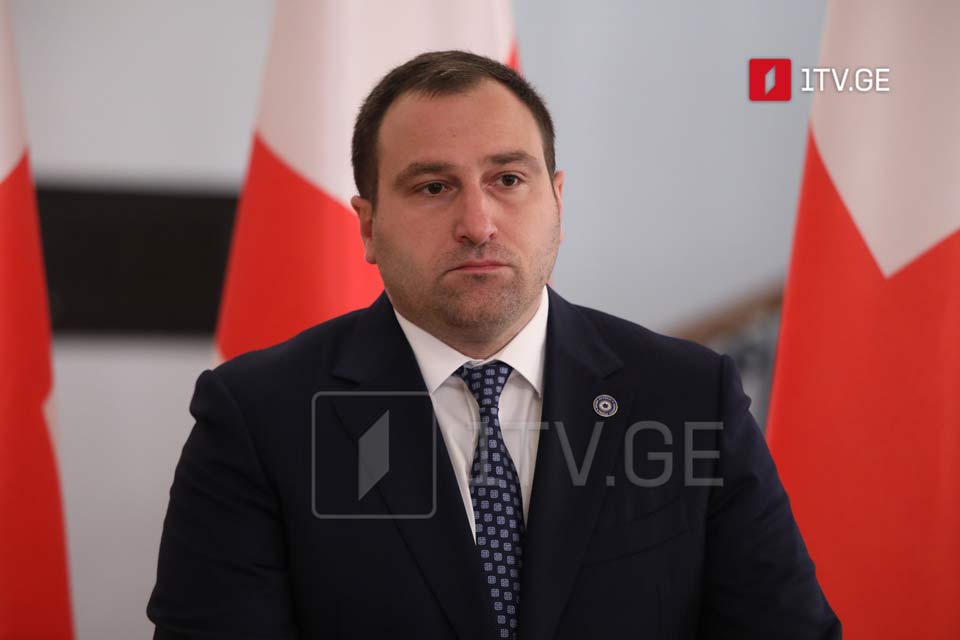
Amendments are being made to Georgia’s Law on Grants. The majority leader, Irakli Kirtskhalia, announced following a parliamentary majority meeting.
According to Kirtskhalia, criminal liability is being established, and the definition of grants is being clarified. Irakli Kirtskhalia also stated that external lobbying will become a criminal offence.
“The definition of grants is being clarified to specify that a grant shall also include funds transferred by any person to another, whether monetary or in-kind, which are used or may be used for activities carried out or planned with the intention or belief of exerting influence on Georgia’s government, state institutions, or society at large. Such activities aim to shape, implement, or modify Georgia’s domestic or foreign policy, and may also derive from the political or public interests, approaches, or relations of a foreign government or political party (this definition directly reflects the definition of political activity in the American FARA law). The receipt of such a grant shall only be permitted with prior authorisation from the Government of Georgia.
The law defines a legal entity from another state whose activities primarily concern issues related to Georgia. It specifies that such an entity may only receive a grant with prior consent from the Government of Georgia. For example, an organisation registered abroad that conducts significant activities in Georgia must apply to the Georgian government for funding; otherwise, it will face criminal liability.
The definition of grants is being clarified to specify that funds transferred in monetary or in-kind form, provided in exchange for technical assistance such as sharing technologies, specialised knowledge, skills, expertise, services, or other forms of support, shall also be considered a grant. Accordingly, if a foreign entity hires experts in Georgia in exchange for payment, this payment will be regarded as a grant, and the issuance of such a grant will require prior approval from the Government of Georgia.
If a representative office, branch, or division of a non-resident legal entity receives a grant, including from the legal entity of which it is a branch, prior consent from the Government of Georgia is required. The draft law states that receiving a grant without such approval will lead to administrative liability, in the form of a fine equal to twice the amount of the unlawfully received grant.
According to amendments to be implemented in the Criminal Code, criminal liability is being established for violation of the procedures established by the Law on Grants. The relevant violation will result in a fine, community service for a term of 300 to 500 hours, or imprisonment for a term of up to 6 years.
An aggravating circumstance has been added to Article 194 of the Criminal Code: money laundering intended for activities on political issues in Georgia will now carry a sentence of 9 to 12 years’ imprisonment.
The draft law also introduces criminal liability for a leading official of a political party who breaches the Organic Law on Political Associations of Citizens, specifically by accepting foreign funding. Such a violation may result in a fine, community service of 300 to 500 hours, or imprisonment for up to 6 years.
External lobbying becomes a criminal offence. Specifically, direct or indirect transfer of money, securities, other property, proprietary benefit or any other advantage to a citizen or legal person of another state in exchange for carrying out activity on political issues related to Georgia will result in a fine, community service for a term of 300 to 500 hours, or imprisonment for a term of up to 6 years,” Irakli Kirtskhalia stated.
According to Kirtskhalia, considering the responsibility towards Georgia and its people, amendments are being made to legislation to ensure that in future no one can find an alternative way to finance chaos and violence in Georgia from outside the country’s borders.
“As is publicly known, over the past five years, Georgia has seen several attempts to overthrow the government elected by its people.
Both the local radical opposition and so-called NGOs funded from abroad were actively involved in revolutionary processes. Fortunately, the state successfully thwarted all such attempts, with legislative changes, particularly transparency legislation, playing a crucial role in this achievement.
Everyone clearly remembers the opposition from Georgia’s foreign ill-wishers to the initial version of the transparency law, which simply required NGOs funded from abroad to submit annual financial declarations. It was revealed that both certain foreign donors and their agencies had much to conceal. Fortunately, Georgian society quickly discerned truth from falsehood, and the government successfully passed a highly important law.
Since then, events in global politics have developed dynamically. Following Georgia, transparency laws regarding foreign funding were adopted in succession by several countries. These included France, Türkiye, Serbia and others.
Society could clearly see that USAID, NED, EED and other foreign funds were financing revolutionary processes in Georgia. The new U.S. administration finally put an end to all of this when it exposed American funds for organising revolutions in various countries and systemic corruption, and closed them on these grounds.
Given the current situation, financing chaos, violence, and revolutionary movements in Georgia from abroad has become considerably more challenging. However, in practice, we observe that certain mechanisms and loopholes remain, and their use could threaten the peace, stability, economic progress, and prosperity that our country has achieved through great effort.
This is precisely why, given our responsibility towards our country and the Georgian people, we are amending legislation to ensure that in the future no one can seek alternative ways to finance chaos and violence in Georgia from outside the country’s borders, ” Irakli Kirtskhalia stated.