


Ahali’s Nika Gvaramia: We must stay steadfast in our approach: protests from within, sanctions from without
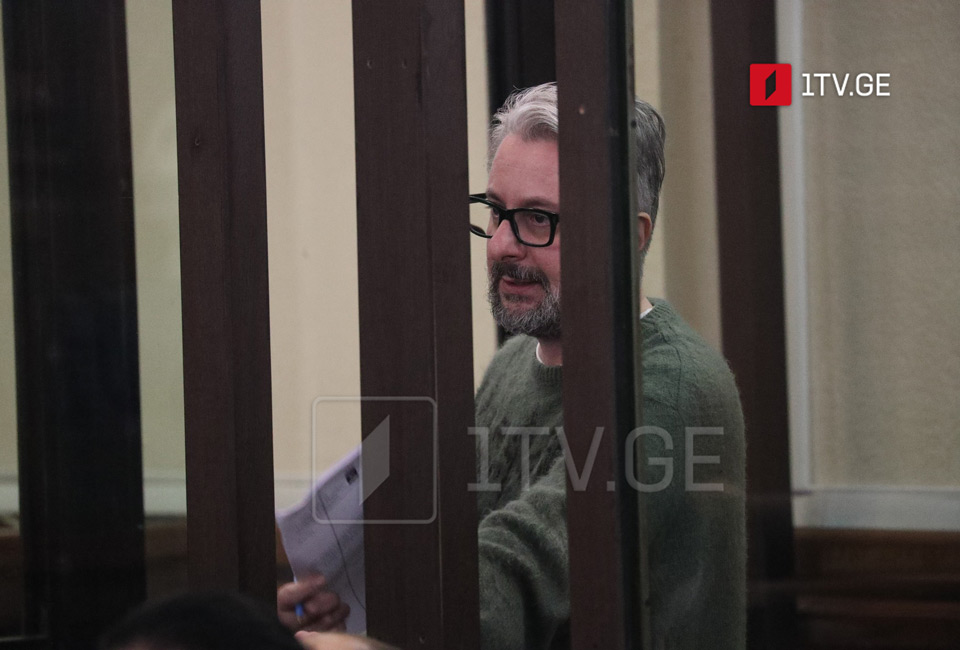
“Ivanishvili must be compelled to schedule elections not according to his rules, or even ours, but in line with international standards. To achieve this, we must remain steadfast in our current approach: protests from within, sanctions from without,” writes Nika Gvaramia, leader of the Ahali party, on social media.
According to him, the fundamental principle of successful protest is that erosion of resistance, defiance and integrity is unacceptable and a precondition for failure, something the protest has no right to allow.
“Abolishing voting rights for emigrants: snap elections or restoring diplomatic relations with Russia? I’ll begin with the answer to this question: the latter, of course.
What troubles the Georgian Dream today? The answer is unambiguous: illegitimacy, which is expressed through international non-recognition. So why might they schedule snap elections? Why has this expectation arisen? How would new elections resolve non-recognition and resulting sanctions? It would only be helpful in one scenario: if these elections met democratic standards, resulted in a Georgian Dream victory, and they secured a mandate.
In a situation where the field of political parties and leaders is manipulated (arrested and cancelled) and where the electorate is also manipulated (nearly a million people are openly deprived of voting rights), this task is impossible. There’s no chance of even minimal election legitimacy in such circumstances.
Then why do they want early elections? To repeal Article 78 of the Constitution? And what exactly does this article prevent the Georgian Dream from doing? What are the restrictions it imposes? The answer is obvious: it does not prevent anything. They do everything they want. Moreover, the European Union’s approach did not begin with this article, and our goal is not solely driven by it.
Even before Article 78 was introduced, European integration had already been the country’s political, constitutional, historical, and existential choice.
Therefore, the idea of “protecting Article 78” seems illogical and appears to be an artificially constructed target. Why would the Georgian Dream want to abolish something they themselves use as a propaganda shield in the eyes of their own voters? As the only argument, they rely on this to justify their actions and to maintain a façade of legitimacy in the eyes of society.
Let’s return to the emigrants’ issue: why did they raise this issue in clear skies, or rather, against a backdrop of stormy skies, when any wrong move could cause decisive damage? What for and as a bargaining chip? Clearly, depriving emigrants of voting rights is manifestly unconstitutional and violates fundamental election principles: universality and equality.
Clearly, this will be challenged before the Constitutional Court, where it seems that the main strategy behind undermining democracy has been communicated: recall the lawsuit aimed at abolishing political parties. What can the Constitution say in response? Yes, it states that such measures violate universality and equality. But it also states that these principles are breached when the government denies rights to Georgian citizens living in Russia and fails to take the necessary measures.
The real test here is this: it is unconstitutional to claim that these citizens “do not participate” (as this law suggests). When it comes to “they cannot participate,” there is a two-step test: whether they have the right (in theory) and whether they have the opportunity (in practice). That is, whether the state has done everything possible; whether it has exhausted all available resources.
In 2024, the state has not fulfilled this obligation, neither in European countries nor in the United States. It has simply “not” done it—not because it “could not,” but because it “did not.” Even this alone would be enough to declare those elections unconstitutional, one-third of voters were disenfranchised due to the government’s deliberate and negligent inaction.
In Russia, this cannot (emphatically, cannot) be guaranteed, because we do not have diplomatic relations. Furthermore, elections in a foreign country are a diplomatic matter, regulated by bilateral agreements and the Vienna Convention. So, what is necessary for all expatriates to participate in elections while respecting the principles of universality and equality? The answer is straightforward: repeal this law and restore diplomatic relations with Russia.
They will then present us with a false dilemma: either the right to vote for immigrants (which should be granted equally to all) or the re-establishment of diplomatic ties with Russia.
All of this can be achieved without a Constitution, provided that the Georgian Dream wishes to do so: to “consider the demands of the population” and no longer enact this law, but with the caveat that “all necessary measures will be taken” to ensure the same rights in Russia. This, quite simply, amounts to nothing less than the restoration of diplomatic relations, which, in essence, is what it is (and cannot be otherwise). I don’t believe this requires any further explanation. Nor does it need clarification what the consequences will be if Georgian elections (and, consequently, a referendum or plebiscite) are held in Russia. I think this, too, needs no explanation, what an additional 300, 400, or 500 thousand falsified votes would signify.
We should also recognise that the current regulations do not in any way hinder the Georgian Dream, even if elections are scheduled for tomorrow. Just as in 2024, when only fifty polling stations will be available abroad, that will be sufficient. So, what is the point of this constitutional and international chaos? There is no need for it at all, just as the abolition of Article 78 of the Constitution does not impede anything. What is needed is legitimacy, and to achieve this, all mechanisms will be mobilised, effectively manoeuvring the opposition into pseudo-elections conducted under their preferred rules.
Ivanishvili must be compelled to schedule elections not according to his rules, or even ours, but in line with international standards. To achieve this, we must remain steadfast in our current approach: protests from within, sanctions from without. Against this background, it is perplexing to discuss the fact that we are compelled to participate in elections scheduled by Ivanishvili and conducted according to his rules, which, in my view, is simply unthinkable.
Such traps, designed to create false dilemmas, still lie ahead. This is the dialectic and internal logic of dictatorship. The fundamental principle of successful protest is that the erosion of resistance, steadfastness, and straightforwardness is unacceptable and constitutes a prerequisite for failure, something we cannot afford,” writes Nika Gvaramia.