


Vice Speaker: One of most insidious ways to subjugate small country is to turn one segment of society against another
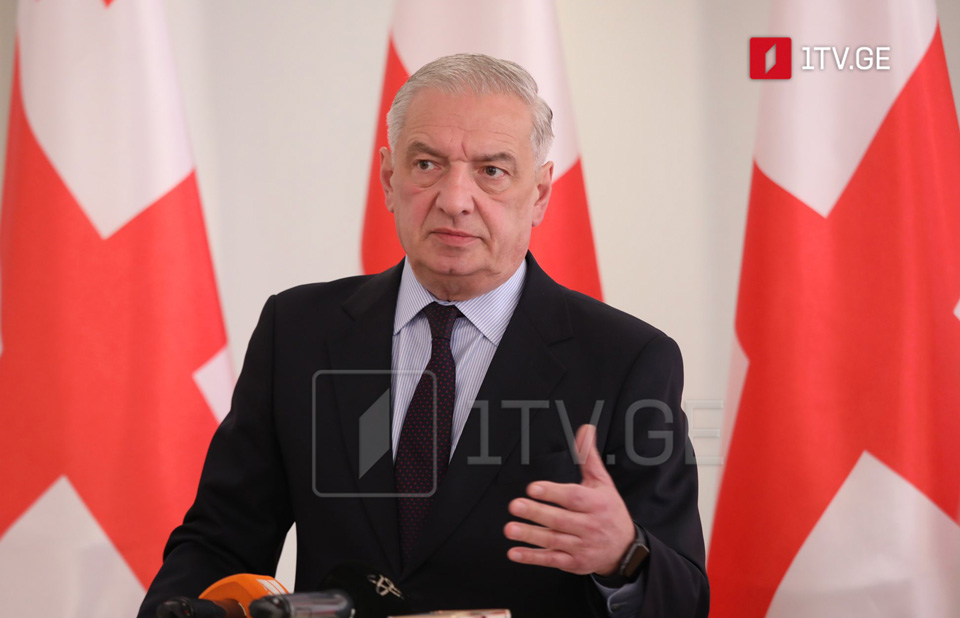
“Marta Kos’s statement reflects a desire for a change of government and for the government to alter its policies in such a way that it becomes completely subservient,” First Vice Speaker of Parliament Gia Volski said.
According to him, when there is an intention to subjugate a small country, several forms of sabotage can be employed, including bringing in weapons, organising explosions and staging revolutions. However, one of the most insidious plans is to turn one part of society against another.
“Marta Kos’s statement reflects a desire for a change of government and for the government to alter its policies in such a way that it becomes completely subservient. The same is happening in Poland. One part of the Polish political spectrum has decided that it should not submit to the EU’s dictates, while still wanting to remain a member of the European Union. There are many such countries, whether Slovakia, Hungary or Italy. They do not want dictates. There are countries and societies that do not want this.
We are telling them the same thing: we have arguments, and they should listen to us. They say they are not interested in arguments; their objective is to ensure that our foreign policy is exactly in line with that of the European Union. There is direct talk of drawing us into a confrontation.
“Gaining influence over the management of the corridor is particularly important. This cannot be achieved under the Georgian Dream government, so they have come up with another formula. They thought that since they could not replace us through elections, and could not bring Ana Tsitlidze or Nika Gvaramia to power, they needed to take control of the judiciary. This means creating conditions that would allow them to govern the country as they see fit,” Volski said.
According to him, this is the situation in Moldova, which is why it is viewed favourably. However, he said, there is nothing admirable about Moldova in terms of democracy, the economy or security, and they themselves know this.
“I love Moldovans and Ukrainians even more. I am in contact with them every day. We call them, our friends call us, and the situation is difficult. But go there and see the conditions for yourselves, then compare them with what is happening here.
They tell us that people are being ‘arbitrarily’ detained in Georgia. We ask them who they are referring to and suggest discussing each case.
When you want to subjugate a small country, there are several forms of sabotage: bringing in weapons, organising explosions and staging revolutions. But one of the most insidious plans is to turn one part of society against another. This is relatively easy to carry out and, at the same time, particularly insidious, especially among young people. The aim is to create such a level of confrontation that the country becomes easy to control. This is what we are witnessing now.
It is an expression of hatred towards Georgians to show hatred even towards those whom they supposedly support but whom they do not actually care about. They do not care whether Paata Burchuladze remains in prison or whether Kordz comes out and sings. What they want is for people to insult one another so that this provokes a response. The ‘elite society’ knows that the same response will be given, with insults a hundred times harsher. But the plan is to turn verbal confrontation into physical violence, so that someone ends up being beaten in the street,” Volski said.