EUMM’s 15th Anniversary – Head of Mission’s interview with GPB First Channel
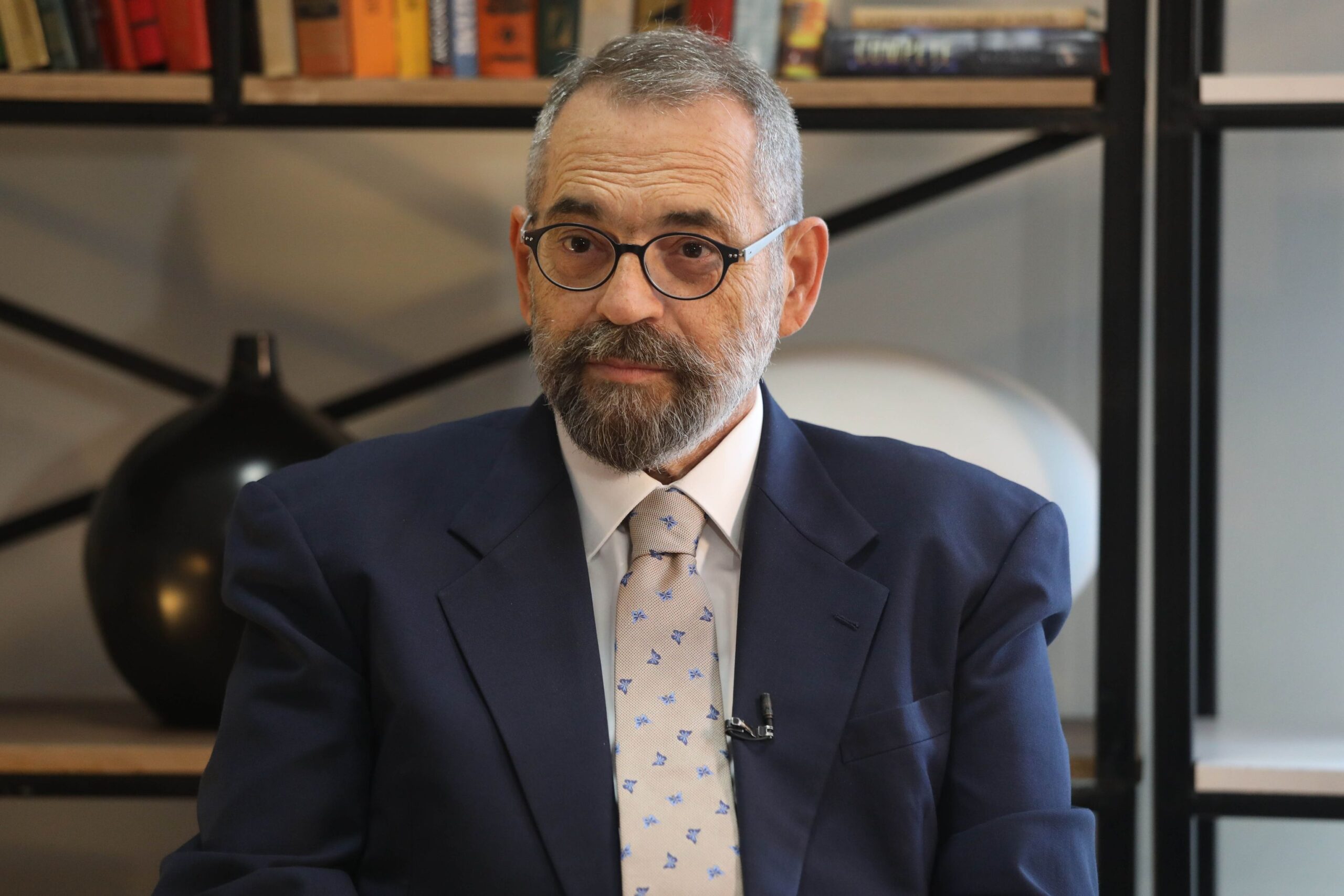
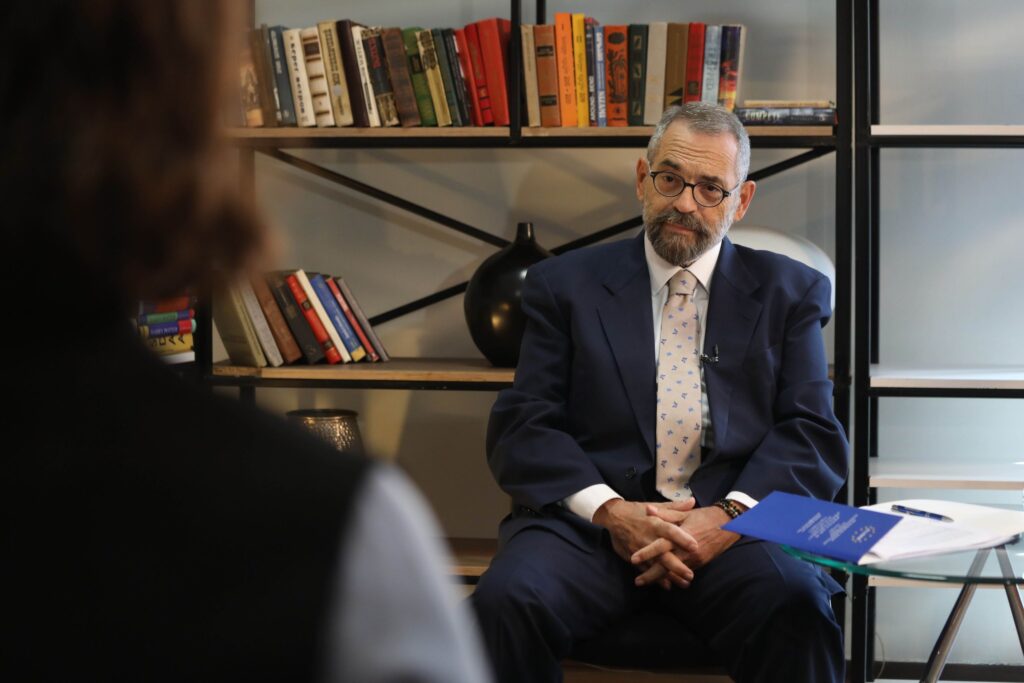
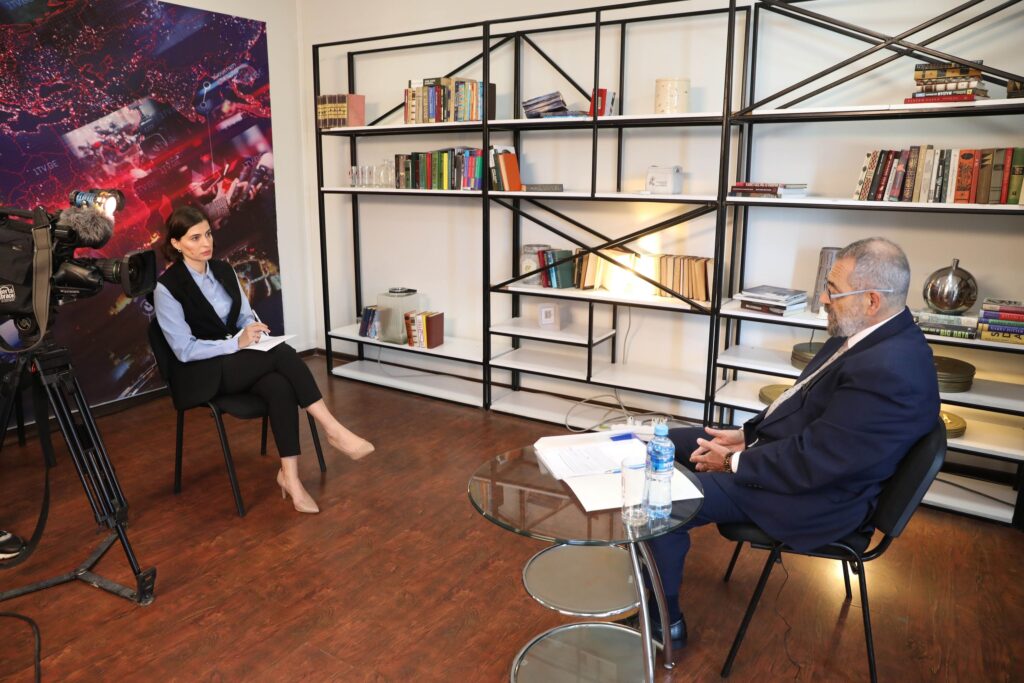
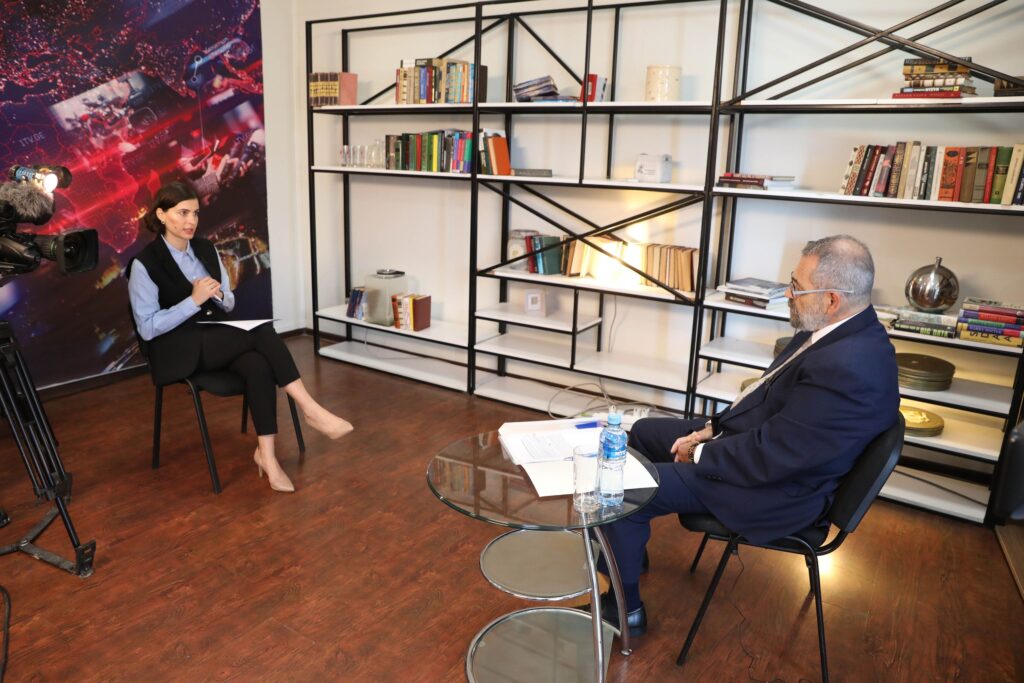
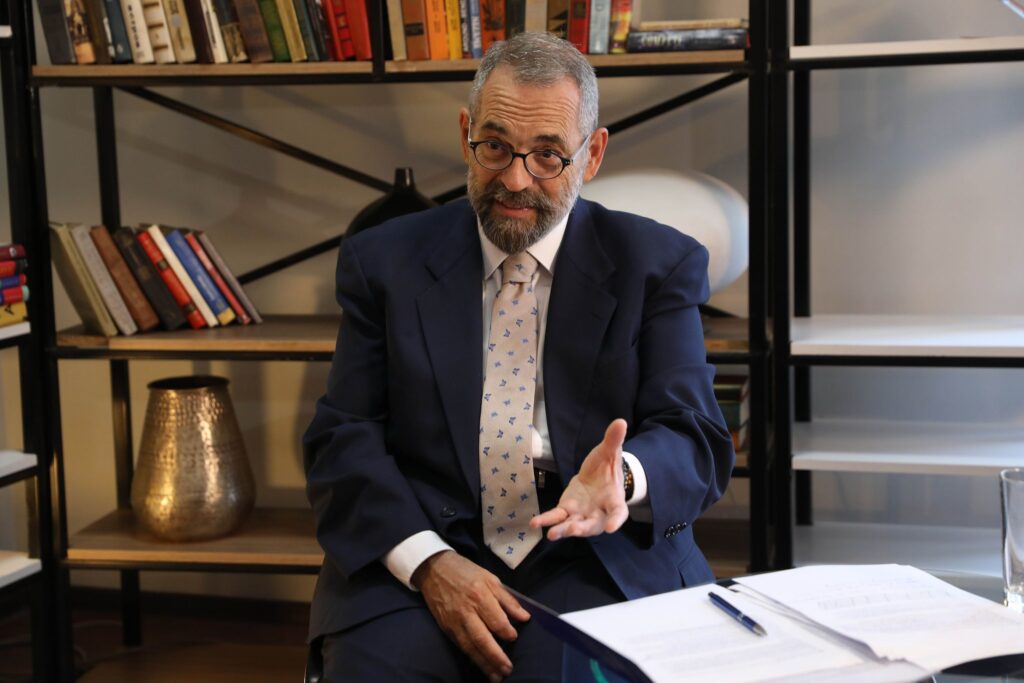
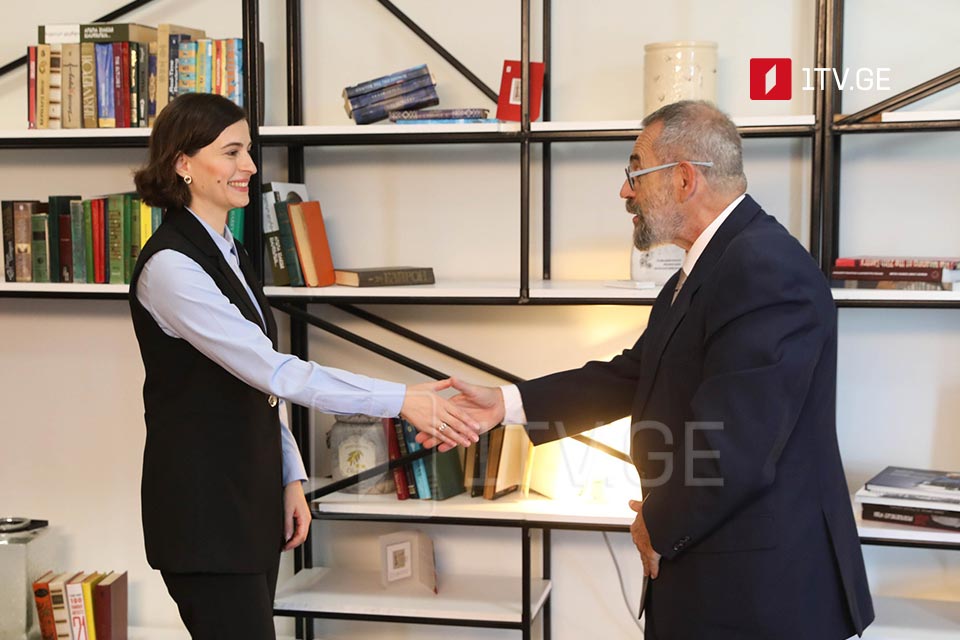
15 years ago, on 15 September 2008, the European Union established the EU Monitoring Mission in Georgia. To mark the occasion, the Head of Mission Dimitrios Karabalis gave an interview to the GPB First Channel. During the interview, he explains how the security situation in Georgia has evolved, and how the Mission responds to challenges.
15 years since the EUMM was deployed in Georgia and since then the EUMM has been the only international presence on the ground. Could you assess the security and human rights situation alongside the ABL, how did it change during this period of time?
Thank you very much for this invitation. It is an honour for me and for the Mission to be invited here. As you know, tomorrow we mark 15 years since the European Union has decided to deploy the EUMM and on the first of October we will have completed 15 years of presence on the ground. In the beginning, it is true that there were very serious incidents along with ABL and there was still fear about the developments. Nowadays and over the years the number of such incidents has decreased considerably and today we can say that the situation is quite stable. Of course, we try to prevent as much as we can any escalation and any flare-ups but still the situation I can say is very sensitive to such deterioration because of various reasons. At the same time, the situation concerning human rights along the ABL has clearly deteriorated and I will start by emphasising that freedom of movement simply is not there and that has very grave consequences for the population living along the ABL and it’s not only that you cannot cross and visit families, friends, church and cemeteries, but you cannot have the proper education in the language you want, you cannot have the possibility to exercise any commercial activities, you don’t have the possibility at the same time to find a job. So, yes, there is much to be done in this domain.
You were appointed as the head of the mission more than seven months ago. What are the key tendencies and challenges regarding Georgia’s occupied regions that you observe?
I’ll start with something that has more to do with human factors. One big challenge is that as time goes by this condition, the situation of alienation and isolation of the people living from the one and from the other side is getting even more accentuated. In a few years probably we will have generations born and raised without having the experience of living together with the other. And this is a problem, because they are losing this feeling that existed before when they had each other as neighbours. And this I think casts a heavy shadow on the future. Now you will ask me what we are doing. We have a very modest, non-politicised program of small projects in which we try exactly to remedy this situation. Far from the lights of publicity, we try to bring people together, we try to make them understand that what is now someday can become what was before. But to this end, the new generation must understand, they must be taught from the experiences of the past. At the same time, we try to bring the sides together, we have, as you know, our mechanism – the Incident Prevention and Response Mechanism (IPRM). We had a meeting several days ago in Ergneti. We don’t deal with political issues there, at the table we put issues that are of concern to the local population. For example, we dedicated a large part of our last meeting to the irrigation issues. The irrigation period now is coming to an end, we have agreed that in October the experts will meet again to see the lessons learned from this season and see what we can do all together to have a better season next year. I will have perhaps a chance later to expand more on what else we are doing at IPRM, but it is one of our tools to try and alleviate the sufferings of the people on both sides. For example, we advocate and we try hard every year on religious holidays to have exceptional openings of the crossing points so people can honour the cultural and religious traditions. With these few examples, it is clear how important is to bring people to the same table. Together with the OSCE, we just facilitate talks. It also proves the importance of activating again the Gali IPRM.
For more than 18 months, Russia continues its war of aggression against `Ukraine. This full-scale intervention has changed the security environment of the whole of Europe. What impact did it have on the security environment on the ground across Abkhazia and Tskhinvali ABLs?
I must say that we are to a certain extent relieved that the Russian invasion in Ukraine and the war that goes on till today has not aggravated the security situation here. Of course, it has added an extra layer of complexity and it is not only this war, in general, South Caucasus has been and remains a very turbulent region. We do our best and the European Union as well to call for restrained and for responsible behaviour. We emphasise in our contacts with all sides that it is not a time for escalation, it is not a time for provocations. We cannot take stability for granted but the situation for various reasons can change very easily.
I would like to ask you whether the number of illegal arrests has changed since the start of the war in Ukraine. What does your data show? And how often the hotline is activated now compared with period before the war in Ukraine?
Illegal detentions is very important issue because it is related to what I said before about the freedom of movement. If you cannot move freely and cross the line then very often out of need, or necessity sometimes you cross. But then we have all those measures taken by the other side that we call, although the term is not exactly correct, “the borderisation”. So we have fences, we have cameras, we have watchtowers and we have detentions – all those factors deter people from crossing and in total, they constitute a violation of freedom of movement.
Now about the number, currently we have four detainees known to us in South Ossetia and three in Abkhazia.
If you look at the numbers over the years, there is a decrease and now we are I think at some of the historically lowest levels of total number of detainees. Some of the reasons why this happened I have explained.More people are now afraid of detention and they simply cannot cross anymore. We follow them through our Hotline which is the mechanism connecting EUMM with the security actors on all sides in order to speed up the release. We advocate for abolishing altogether the practice of detention. Somebody crosses, okay, they stop him and he should be returned immediately back. When we have detentions the Hotline is used always in order to find out more about the prisoner, about his/her fate, his/her state of health, if there is a court where he/she will be charged, the dates, and so on. And we do our best and we contribute to the best of our abilities to the early releases. I want to mention, as this is not very well-known to the wider public outside the communities and the people along the ABL, that we use the Hotline for many other reasons that are important. Up to now over the years we’ve had 20,000 activations and only in September we will reach the number of 200. Mostly in September, it was about irrigation issues. At the same time when we have for any reason movements towards the ABL for official reasons or any other reason, we give early warning signals. And something that may sound to city people a little bit funny, but it is extremely important for those people in these areas is the activations when livestock, cattle, horses, pigs, horses cross from areas where there are no fences. Because you understand that families of farmers, the inhabitants of this area, how important for their lives the loss is of one of these animals. And we have a very good cooperation. I will take away from Georgia when I leave as a Head of this Mission one very particular activation. I got it in my messages where there was a very nice description of a young bull and it was a really fantastic description – he was black, three years old, he responded to his name if you called him, with grey eyes, white signs on his front and that he was a little bit naughty, but he should be returned immediately back. And it worked I can tell you. Happy end for this one.
Your monitors patrol alongside the ABLs daily, and besides monitoring the security situation, they speak to locals, and, as I believe, they know much about their daily life. In your opinion, what are the most significant current problems they face?
Thank you for that question because I have said it is very important for us the interaction between our monitors and local populations. It is not for gathering intelligence, it’s just to see how they live, what occupies them, and also what they think about the future. We are training our new monitors how they should approach people, we tell them elements of the history of the area, about cultural elements of the Georgian people, we even offer to our monitors if they wish and they have time lessons in the Georgian language so they can communicate. We patrol and then we get out of the car, talk about the weather, about the crops, and through this interaction, we try to understand them. The most usual problems are freedom of movement and the fact that there are no job opportunities. They see that the young generations are leaving. They also have fear for the future because they know that if their generation passes away along with its experience and it’s knowledge what will become in that area. They show very often abandoned houses and small enterprises that they had to close. They don’t have the money to transport their goods, agricultural goods or something they produce there to big cities in order to sell. And of course, they cannot communicate and have commercial exchanges with the other side. They complain very often about the lack of local infrastructure. And what we can do in this case is just for our analysis and our information, collect these narratives. And when it is proper, communicate those concerns to other organisations that can provide some practical help.
The de facto authorities of Abkhazia and Tskhinvali still deny the EUMM access to the occupied territories, and your monitors are unable to exercise their mandate there. Do you have any communications with de facto regimes in Sukhumi and Tskhinvali about this issue? Are there any ongoing attempts to get access to the occupied regions? Do you see any perspective of gaining access to these territories?
Yes, you are absolutely right, our mission is mandated to operate everywhere but unfortunately, we are deprived of this right by the de facto authorities in Tskhinvali and Sukhumi. Yes, we are pushing in that direction, the EU is doing its best. We have as I mentioned the mechanism of IPRM, where we have the chance to sit and talk about practical issues. And the GID, the Geneva International Discussions, is the other forum where we along with the three co-chairs – the United States, OSCE and the United Nations can discuss more political issues based on and informed by our reporting as well. But we have not seen any clear signs that there is a will from the de-facto authorities to change the current situation. So, we have to rely on other sources to gather the information and the intelligence from the other two sides, the other two regions. Being able to have unrestricted access is important and, well, we continue with our efforts to gain access.
What are your main goals as the Head of the Mission?
I didn’t think that at this stage when I assumed my duties, there are much new things to bring. This is an established Mission, a successful Mission, and what I want to do is to make sure that we continue the same path as we have been going on for the last 15 years. I want to build on this 15-year legacy to ensure that we continue fulfilling our mandate and of course, explore any possibility that appears to do what we cannot do now. We must do our best to overcome those obstacles that impede the full implementation of our mandate and we must safeguard the integrity of the mission’s impartiality. And at the same time, at these turbulent times, we must ensure that the European Union’s presence is felt here, in Georgia, and in this region.
I can’t conclude my interview not to ask you about the High Representative Borrell’s visit in Georgia. What was his main message when he visited your mission near the ABL?
For us, it was a very important moment in our 15 years of history. The High Representative visited us on the year of our 15th anniversary here, on the ground. It was if you like some kind of reward for the job and the work we have been doing and we will continue doing. At the same time, I think it was a very clear message to the Mission, to Georgia, and to everybody else who listens and sees, that the European Union remains engaged and will continue to contribute through the Mission to finding a peaceful solution to the conflict in Georgia. That was the main message and I must say from the Mission’s point of view that we have appreciated very much this visit. The High Representative is a very human and warm person, so he had the chance even for a short time to meet and talk with the monitors, with our Georgian staff of the mission and with us. He left very satisfied with what we are doing.
If you were asked by a European taxpayer – why the EUMM in Georgia is important, what would be your answer?
I would start by saying that we have a very active press and information service that provides almost 365 days a year very concrete and precise information to the European public through television channels that are visiting us, newspapers, bloggers, everyone. Via social media we show what we are doing, why we are doing it, and how we spent the taxpayers’ money. I think that the High Representative’s visit which had a very wide media coverage in Europe has shown even to those who did not know about us, what we are and what we’re doing. And at the same, we have now colleagues from 25 out of the 27 Member States represented in our Mission. They are also witnesses who can testify to the national authorities about what we are doing. You have noticed how often we have visits, Member States are interested. And after the war in Ukraine, after the war in Karabakh, they want to see Georgia remaining an island of stability. At the same time, we try and we provide credible and non-politicized information not only to the EU member states and the governments but also to the European institutions in order to inform their policies. And that’s why I repeat how important it is for us that our reporting, and our analysis to be objective non-politicized and always based on facts. And it’s widely known that we are working very closely with international organizations for the protection of human rights and for the alleviation of the suffering of the affected population along the ABL.