


CoE Secretary General: With full respect for principles of sovereignty and judicial independence, I call on governing majority to preserve space for political opposition
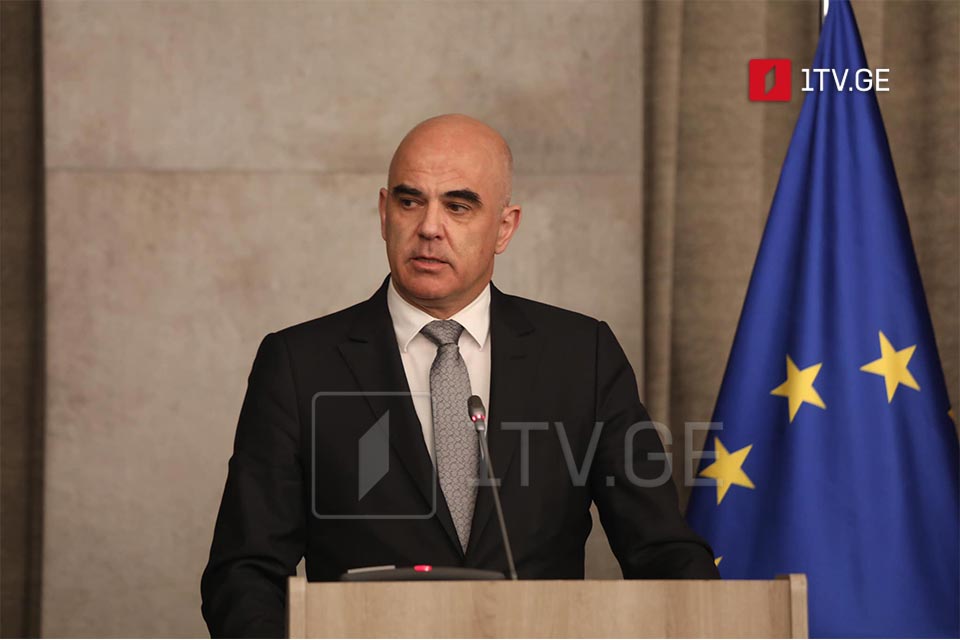
Council of Europe Secretary General Alain Berset has said he respects the principle of judicial independence ahead of the Constitutional Court of Georgia’s hearings on a case seeking to ban opposition parties, while urging the Georgian authorities to safeguard democracy and political pluralism.
“Georgia’s Constitutional Court is due to begin hearings on an application by 88 parliamentarians from the governing majority to ban five opposition parties. Without prejudging the outcome of these proceedings and with full respect for the principles of sovereignty and judicial independence, I call on the governing majority to uphold political pluralism and preserve the space for political opposition,” Berset said.
He stressed that political pluralism is essential to a healthy democracy and holds a central place among Georgia’s commitments as a member state of the Council of Europe.
“Political pluralism is essential to a healthy democracy and central to Georgia’s commitments as a member of the Council of Europe. As a party to the European Convention on Human Rights, Georgia is bound to guarantee freedom of expression and freedom of peaceful assembly and association. These rights enable different political forces to organise, express their views and compete in elections. The case-law of the European Court of Human Rights requires particularly compelling justification for dissolving a political party, subject to strict requirements of necessity and proportionality. These are fundamental standards of the common European legal space to which Georgia belongs.
The governing majority has a particular responsibility to safeguard these conditions and respect the legitimate role of political opposition, both within and outside Parliament. A governing party that seeks to remove democratic checks on its power weakens the very country it seeks to serve.
These proceedings take place against a backdrop of growing restrictions on civil society, independent media and freedom of peaceful assembly. Taken together, these developments risk undermining the checks and balances essential to democratic governance in Georgia.
The Council of Europe will closely follow developments and continue its dialogue with Georgia to uphold the Convention and support Georgia in fulfilling its obligations, preserving political pluralism and protecting the fundamental rights and freedoms of all its citizens,” Berset said.
The constitutional application, submitted by 88 members of the Georgian Parliament, seeks to ban the activities of five political parties: Unity – National Movement; Coalition for Change – Gvaramia, Melia, Girchi, Droa; Strong Georgia – Lelo, For the People, For Freedom; the Federalist Party; and Gakharia for Georgia.
The Constitutional Court is scheduled to begin hearings on the case on October 21.